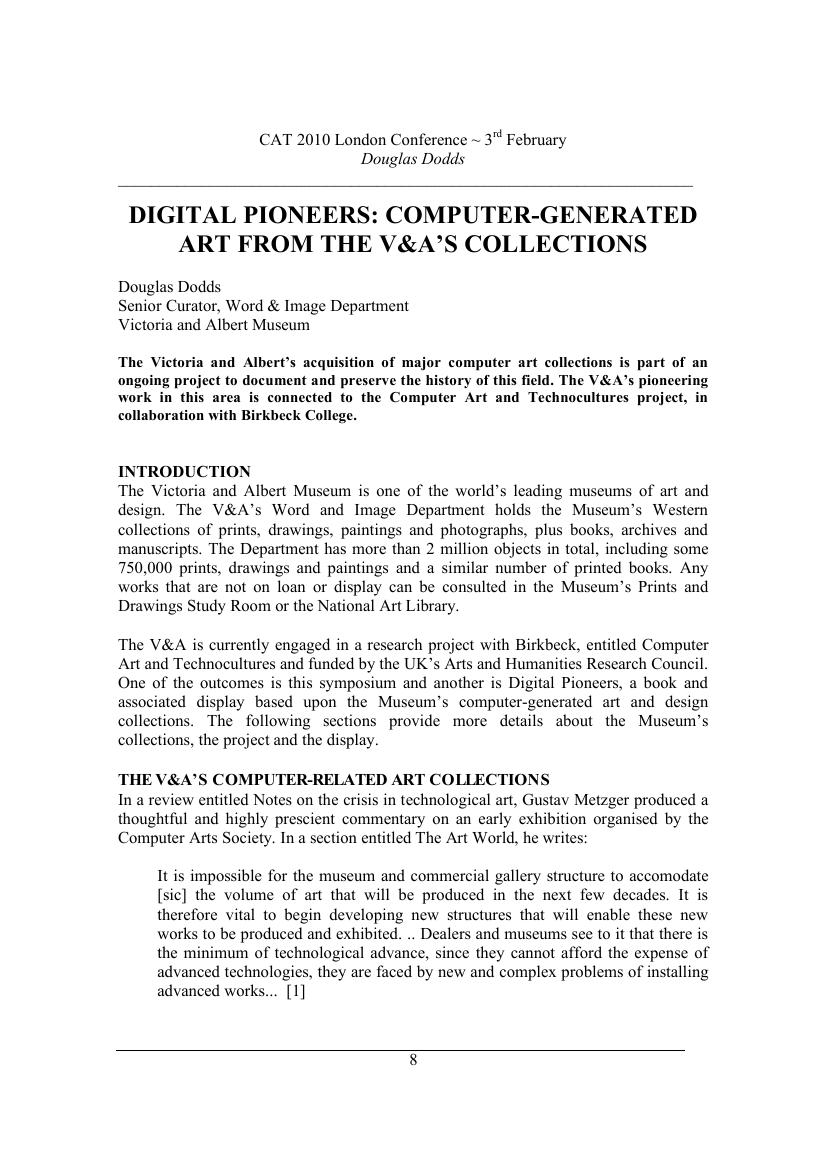
Photo: Alexander Kempkens, CC BY-SA 3.0, via Wikimedia Commons. Credit: Alexander Kempkens; also printed in „Bilder Image Digital, Computerkünstker in Deutschland 1986“
Georg Nees
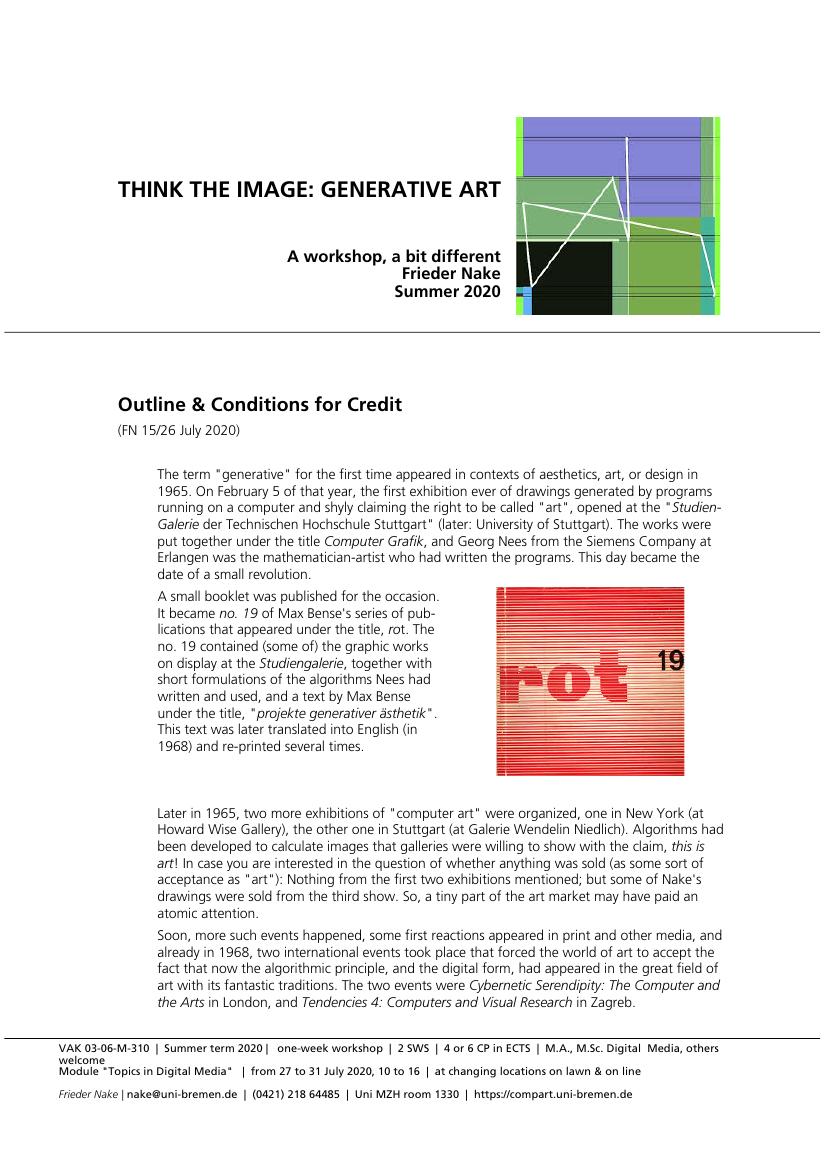
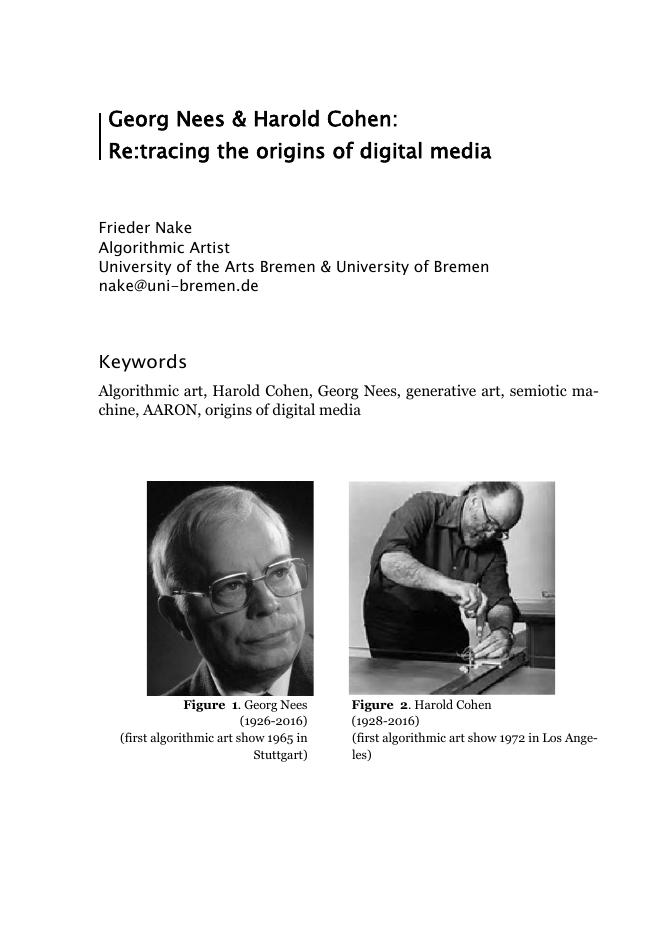
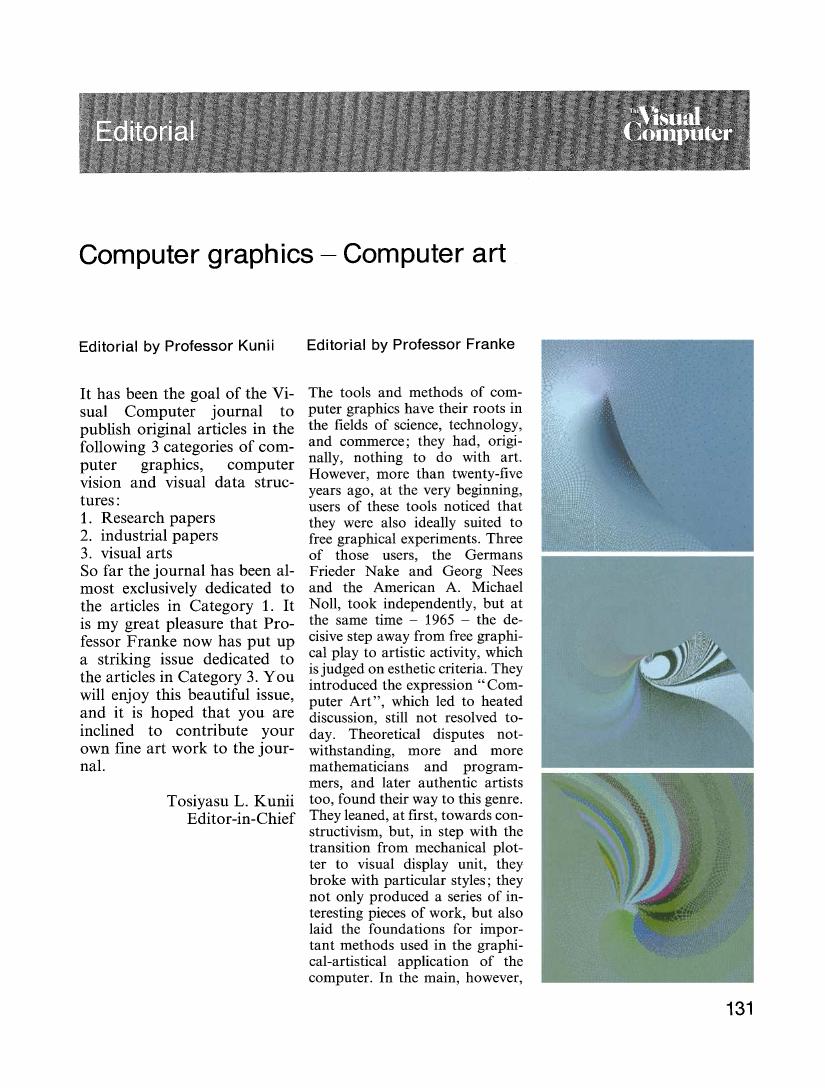
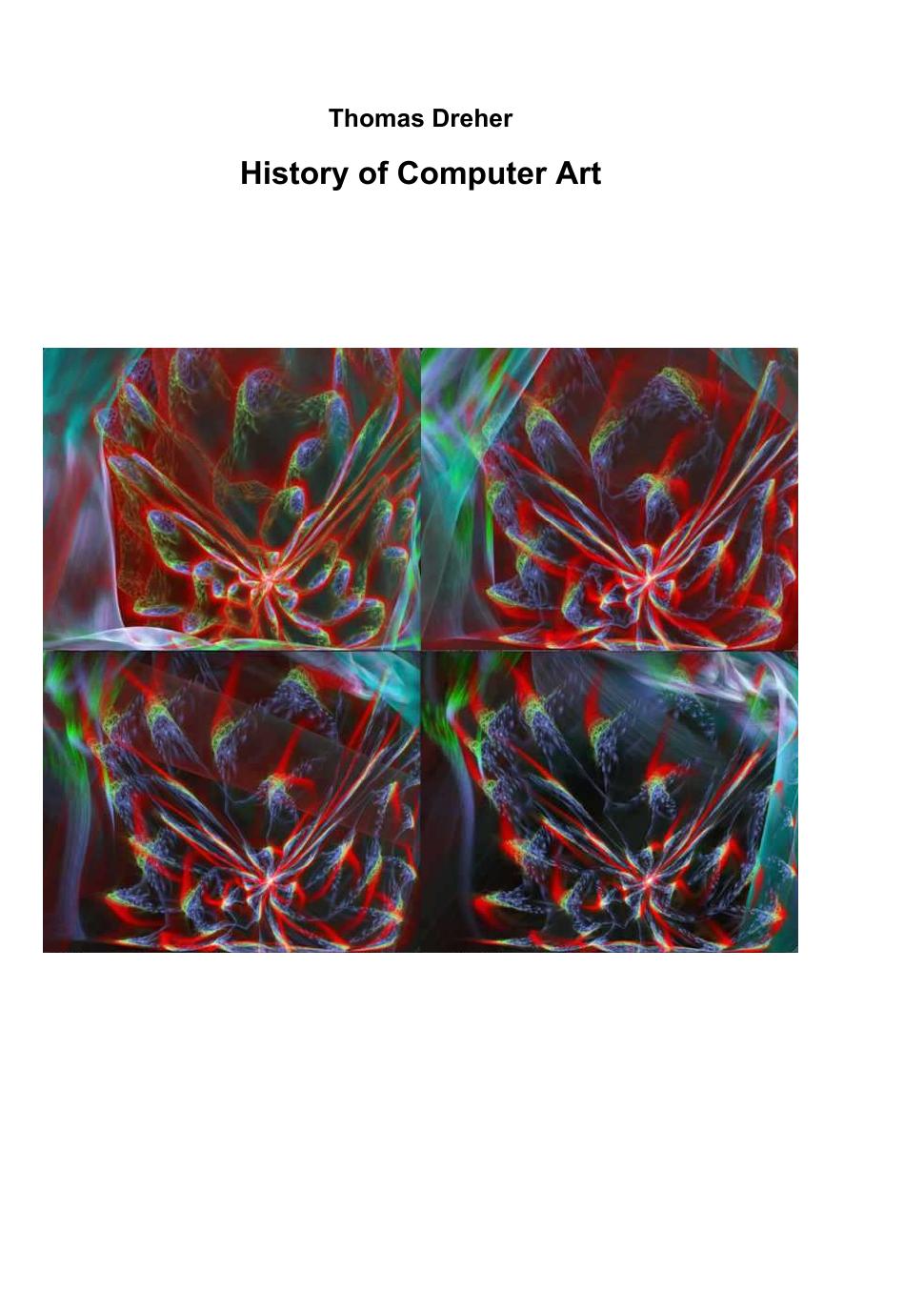
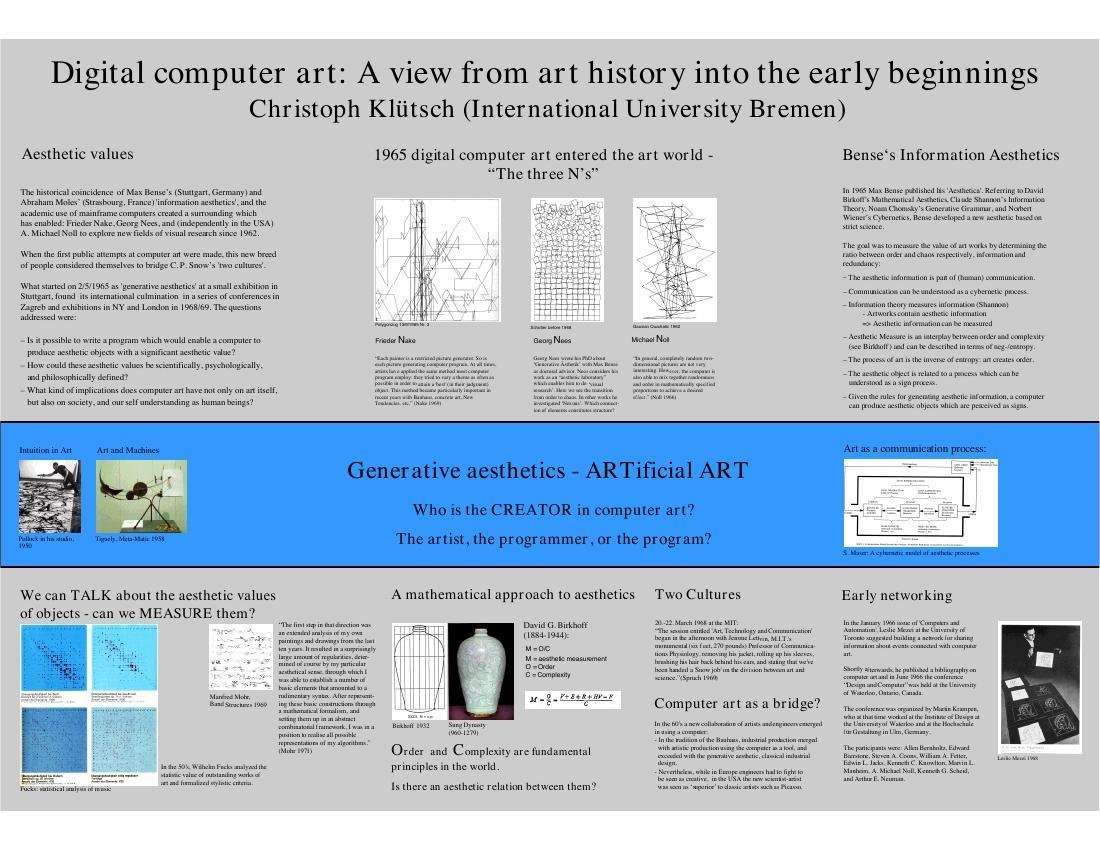
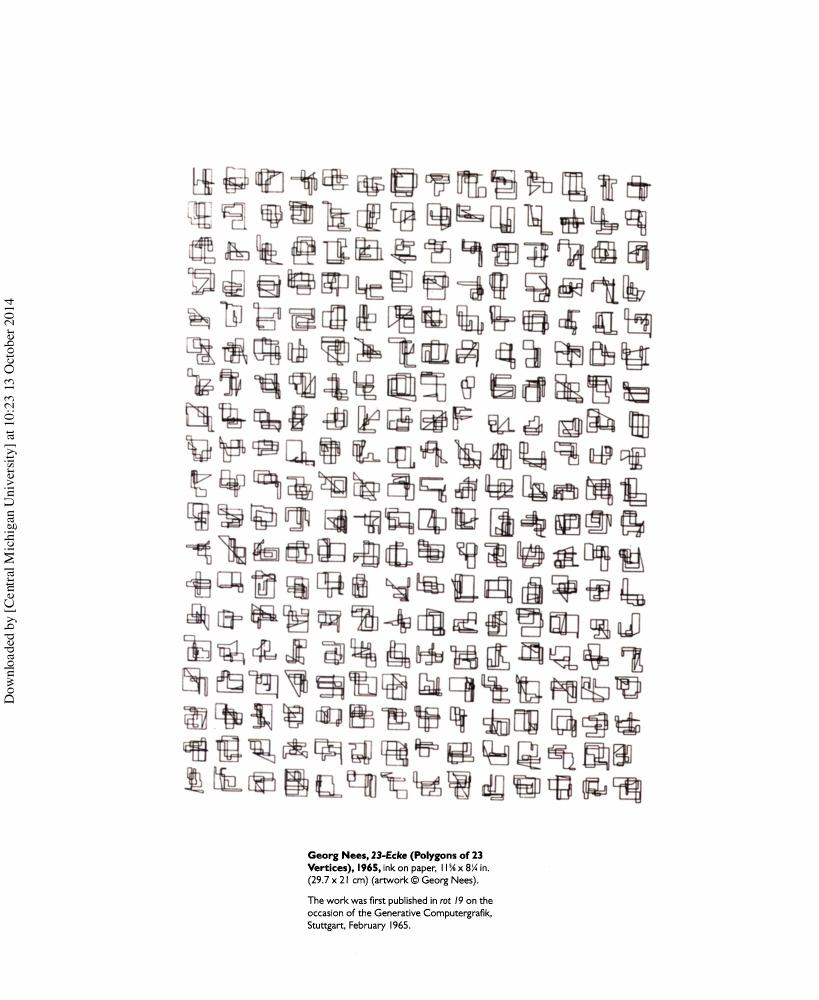
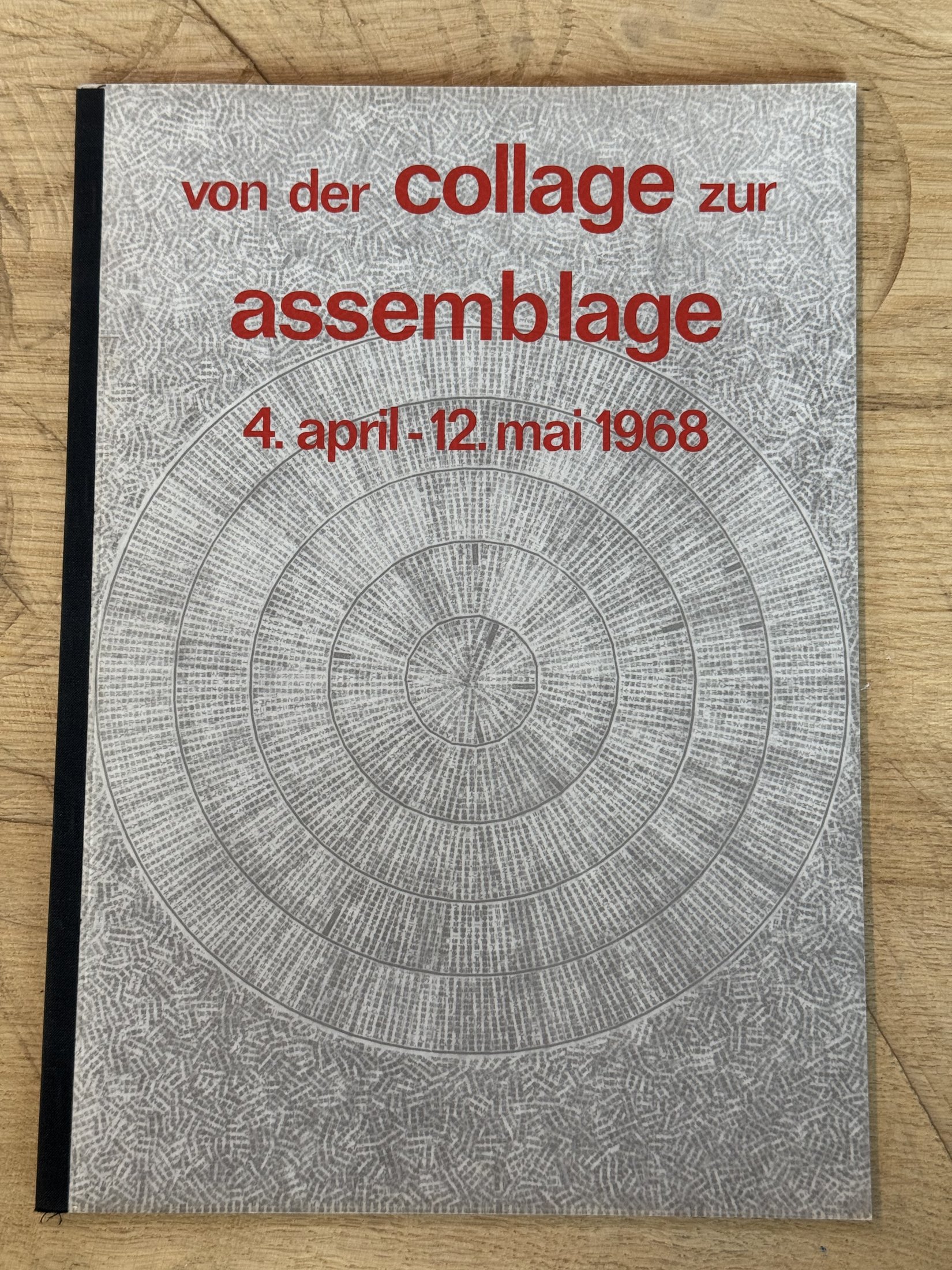
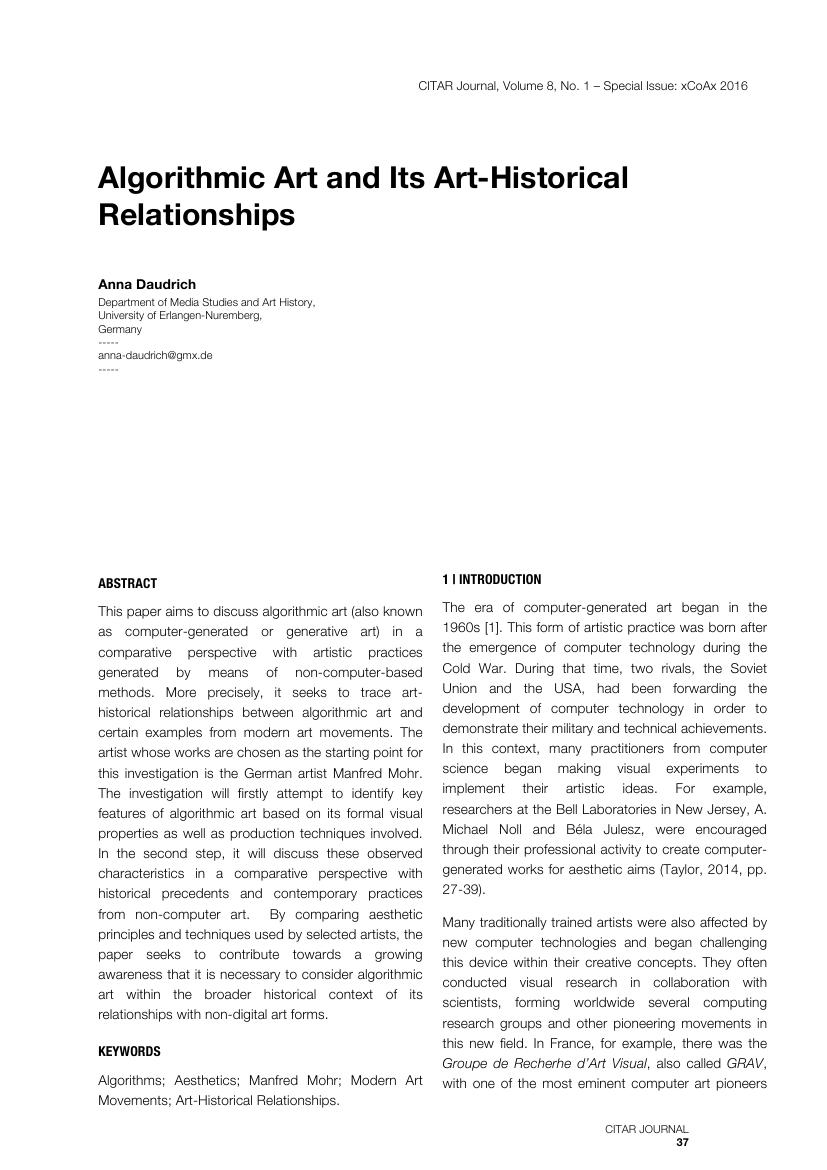
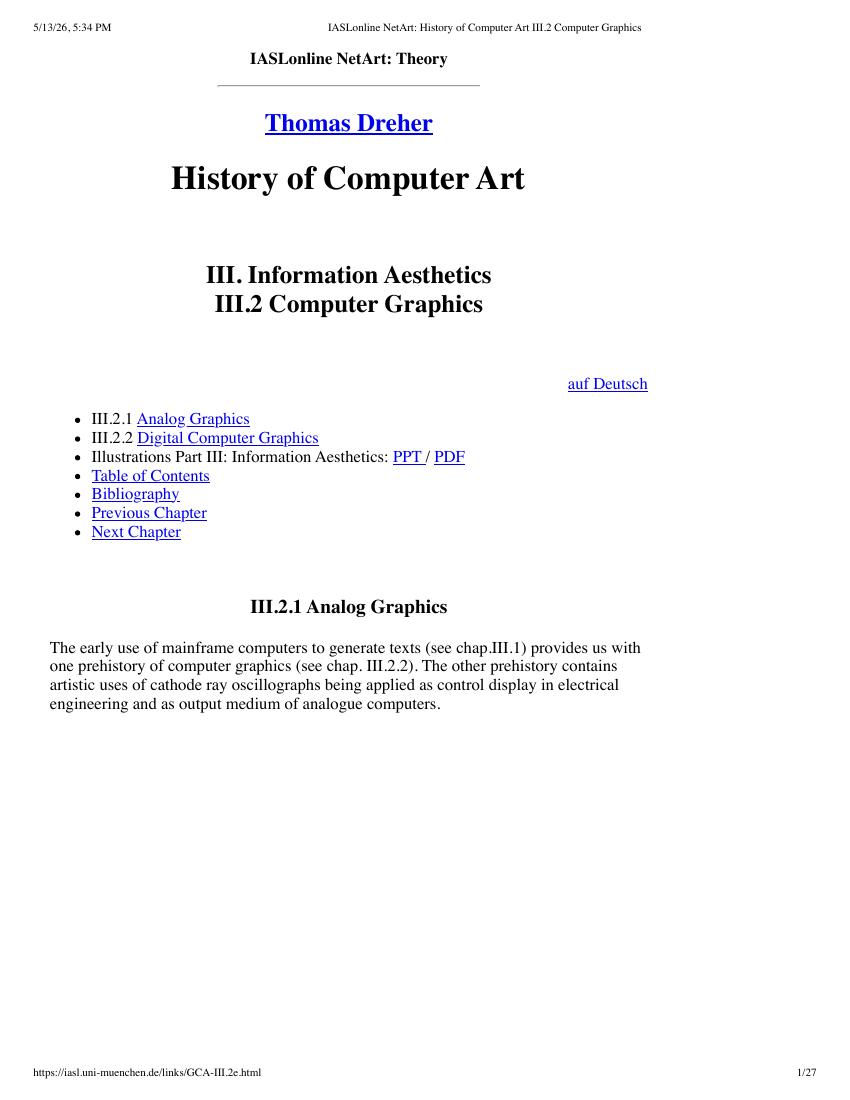
Georg Nees (1926–2016) held the first exhibition of computer art anywhere: February 1965, at Max Bense's Studiengalerie at the Technische Hochschule Stuttgart, where his plotter graphics — drawn by a Zuse Graphomat Z64 from ALGOL programs — hung under the banner of Bense's information aesthetics. Born in Nuremberg, he studied mathematics and physics at Erlangen after the war and spent his working life, 1951 to 1985, as an industrial mathematician at Siemens-Schuckertwerke in Erlangen, writing his first programs in 1959. From 1964 he studied philosophy under Bense in Stuttgart; his dissertation Generative Computergraphik (accepted 1968/69, published as a book in 1969, program listings included) was the first thesis on the field. He is one of the "3N" of computer-art founders — Nake, Nees, Noll — and Erlangen made him an honorary professor of applied computer science in 1977. Retirement did not slow him: from 1987 he taught himself the era's color desktop printers — an Okimate 20, then an HP Paintjet, driven from an Atari — and collected the "creative coincidence" of their errors. Schotter, his canonical tumbling-squares plot, is in the V&A. These are really special up close: the detail is insanely precise.
Artist's website (dam.org) ↗Read more on Wikipedia ↗
2 physical works
Works in the collection


In the library