Lillian Schwartz beside Proxima Centauri Globe, 1968-69-Courtesy of The Henry Ford
Lillian Schwartz
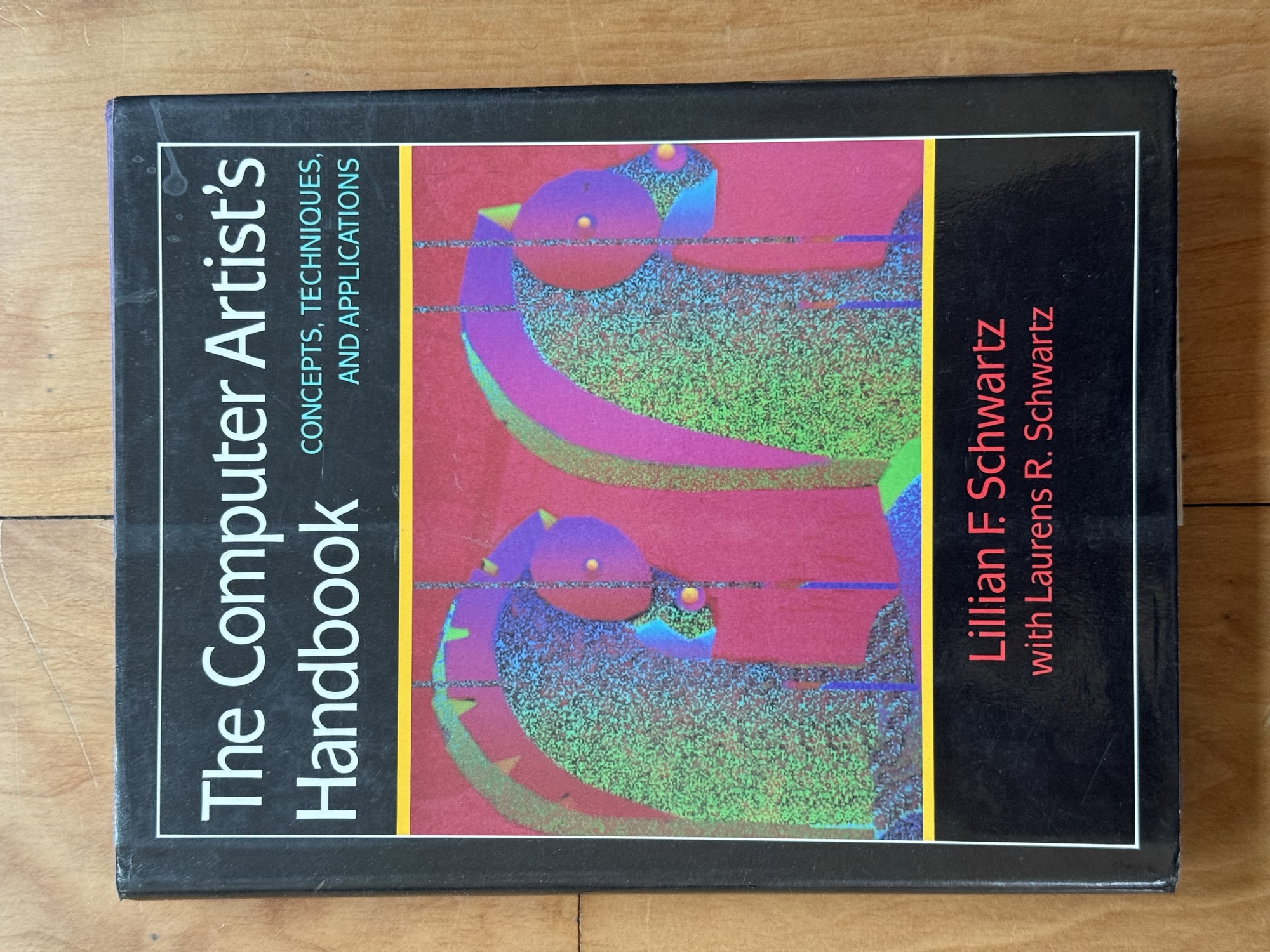
Lillian Feldman Schwartz (1927–2024) got to Bell Labs the good way: her kinetic sculpture Proxima Centauri, built with Danish engineer Per Biorn, won a place through E.A.T.'s competition in MoMA's The Machine as Seen at the End of the Mechanical Age (1968) — and Leon Harmon, whose Studies in Perception I hung in the same show, invited her in. From 1969 she stayed a "resident visitor" for some thirty years, making films with Ken Knowlton — Pixillation (1970), Olympiad (1971) — that ran computer output through hand painting and optical post-processing; she was always a hybrid artist, a painter first. Her computer analysis proposing that the Mona Lisa's face aligns with Leonardo's self-portrait made headlines in the 1980s, and The Computer Artist's Handbook (1992), written with her son Laurens, set down what she had learned. Born in Cincinnati in 1927, she died in Manhattan in October 2024; her archive of more than 5,000 items went to The Henry Ford museum in 2021, and her work is held by MoMA, the Met, the Whitney, and the Centre Pompidou.
Artist's website (en.wikipedia.org) ↗Read more on Wikipedia ↗
1 physical work