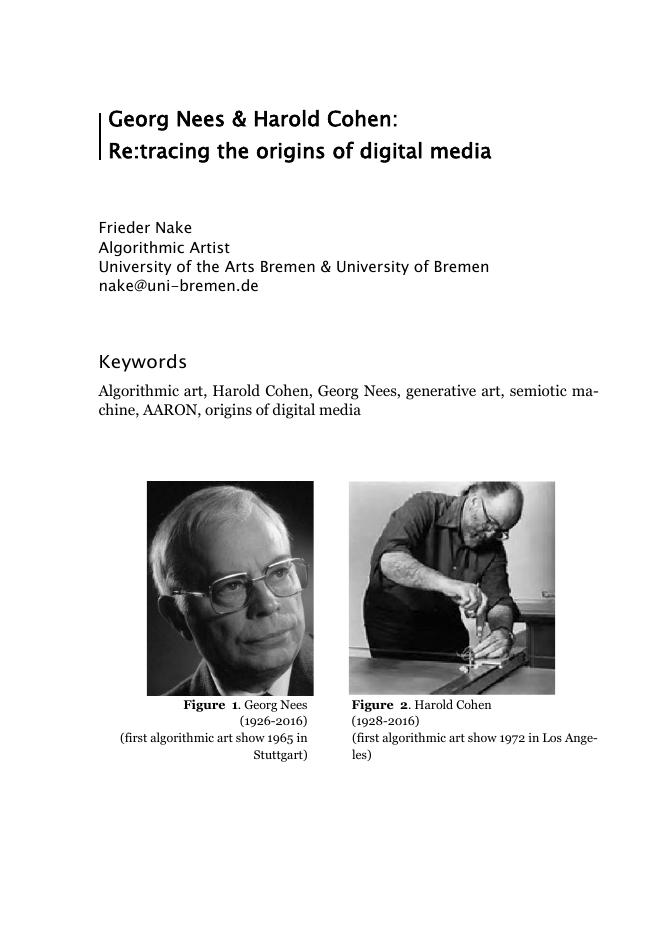
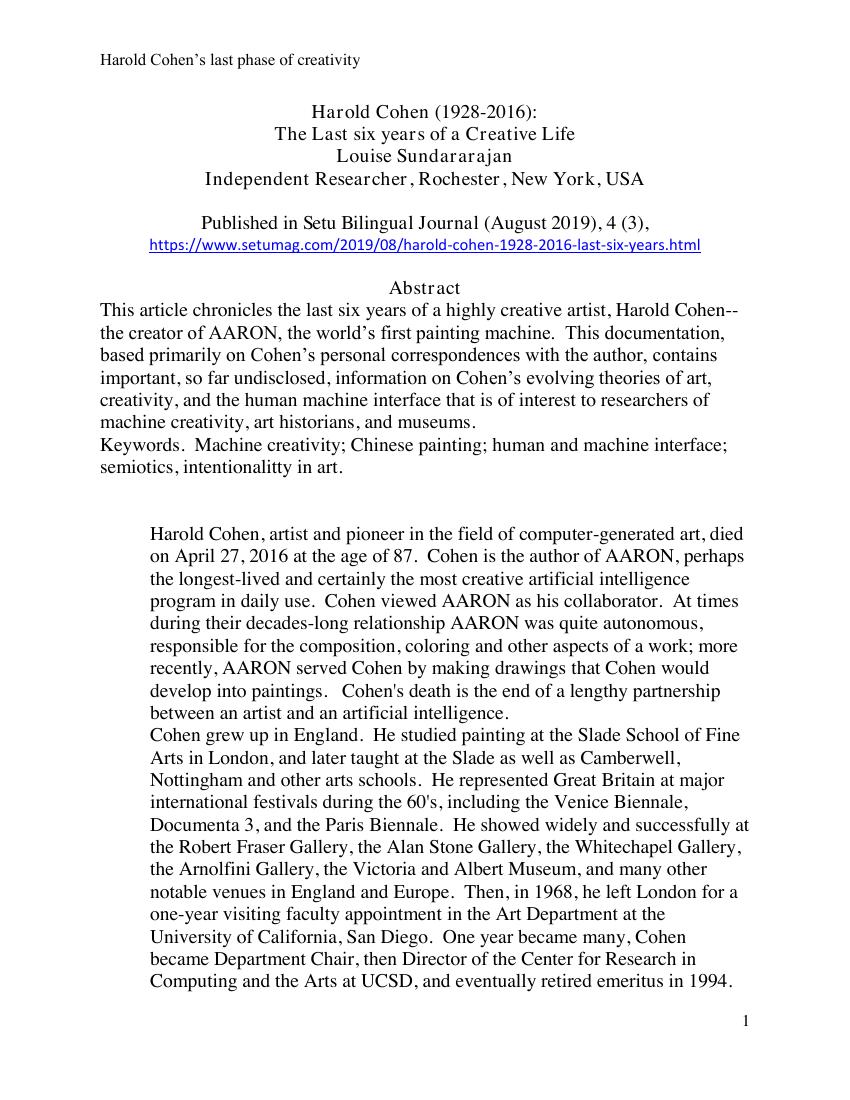
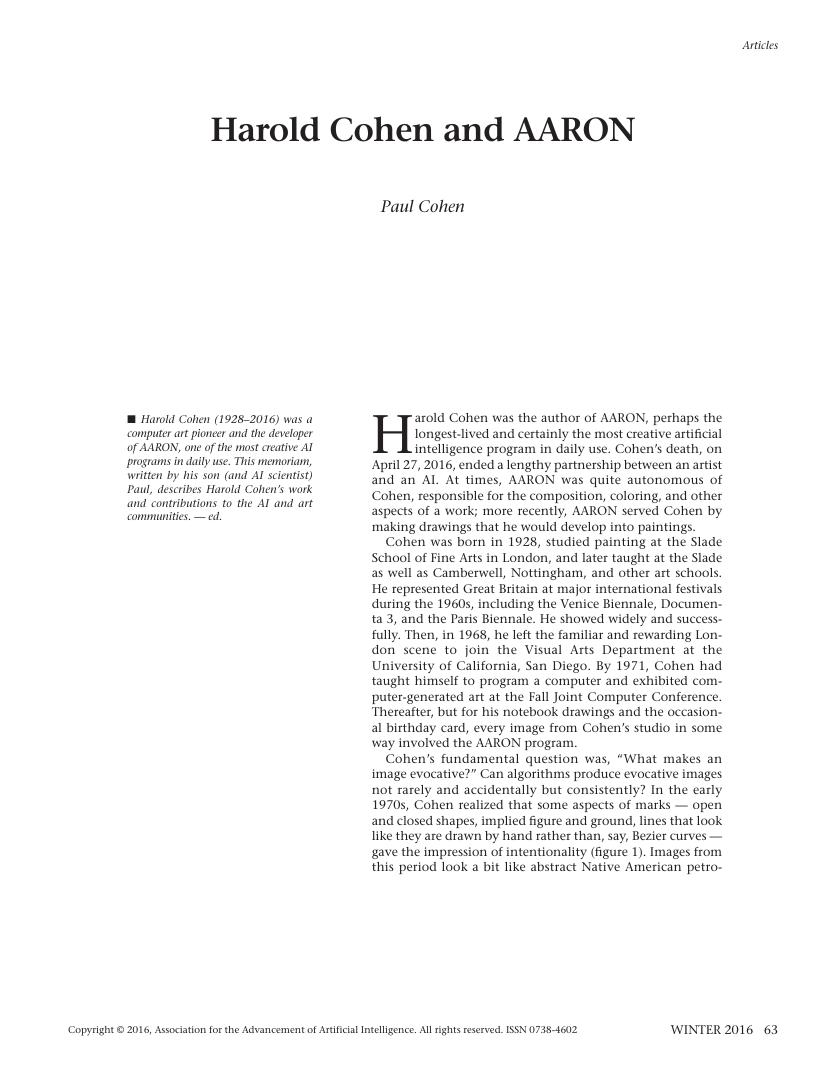
Harold Cohen courtesy of the Harold Cohen Trust
Harold Cohen
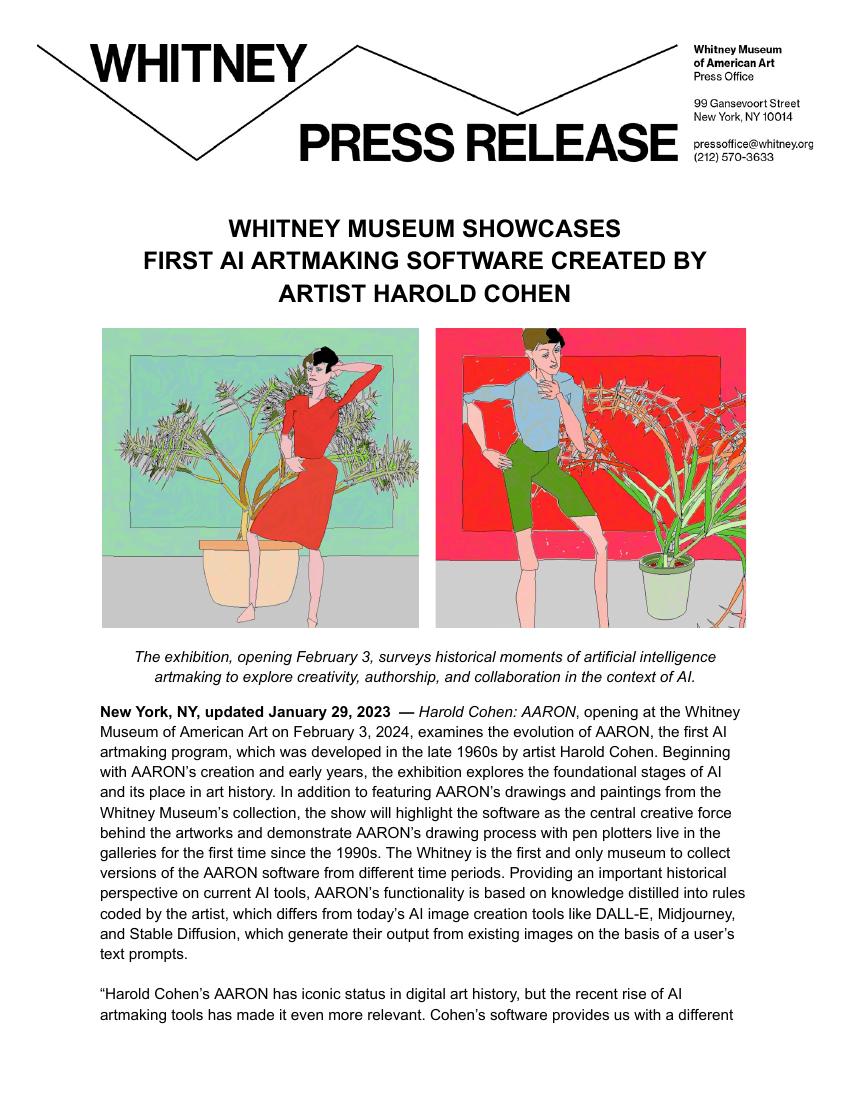
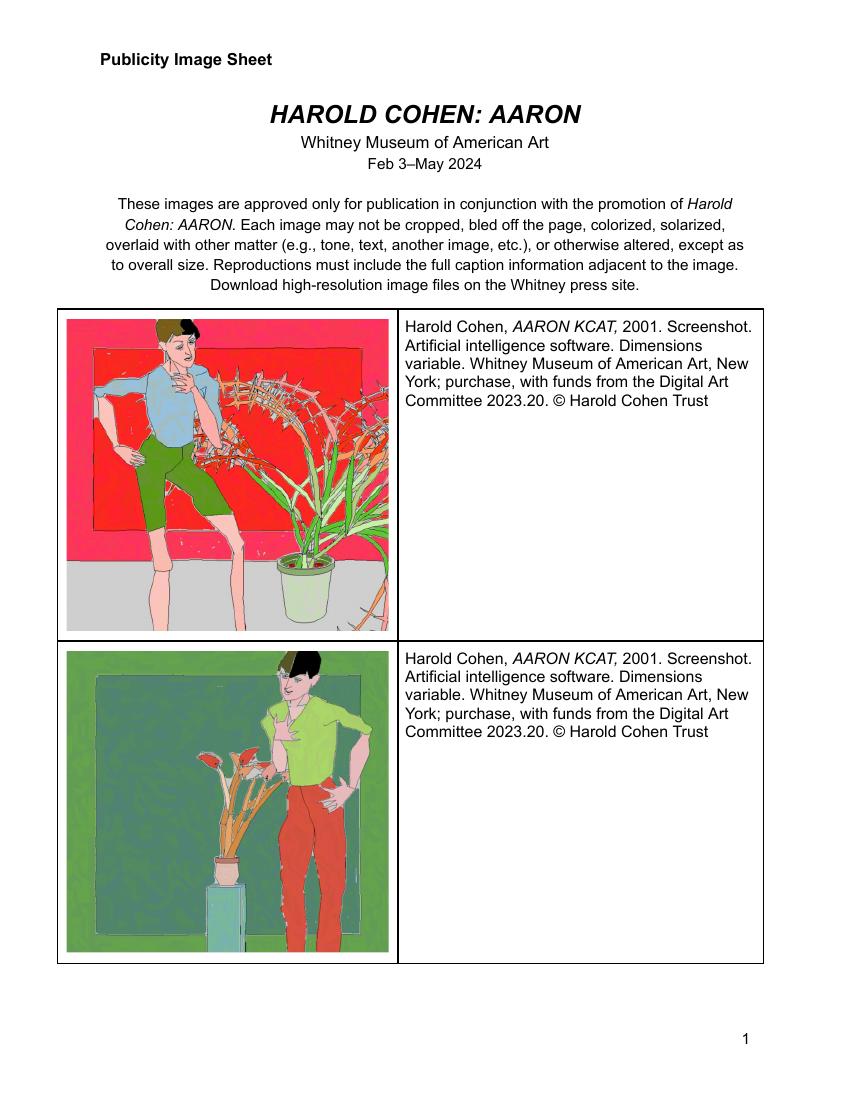
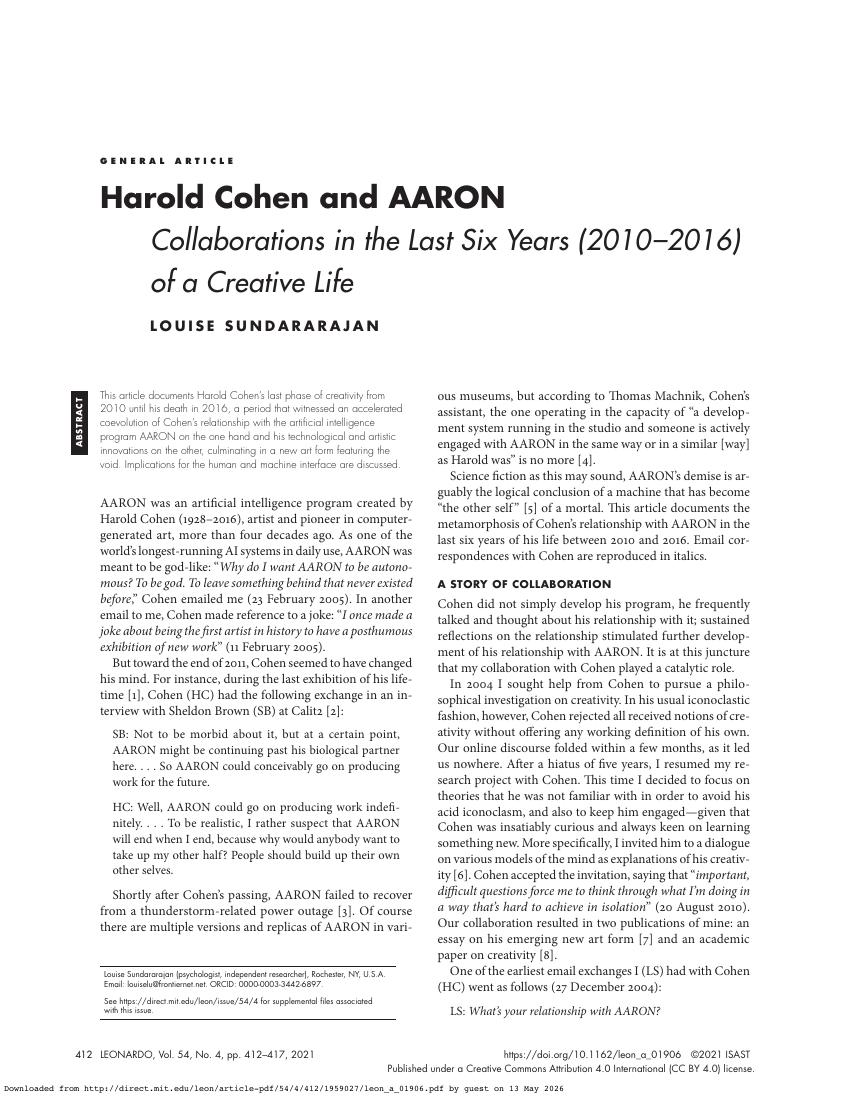
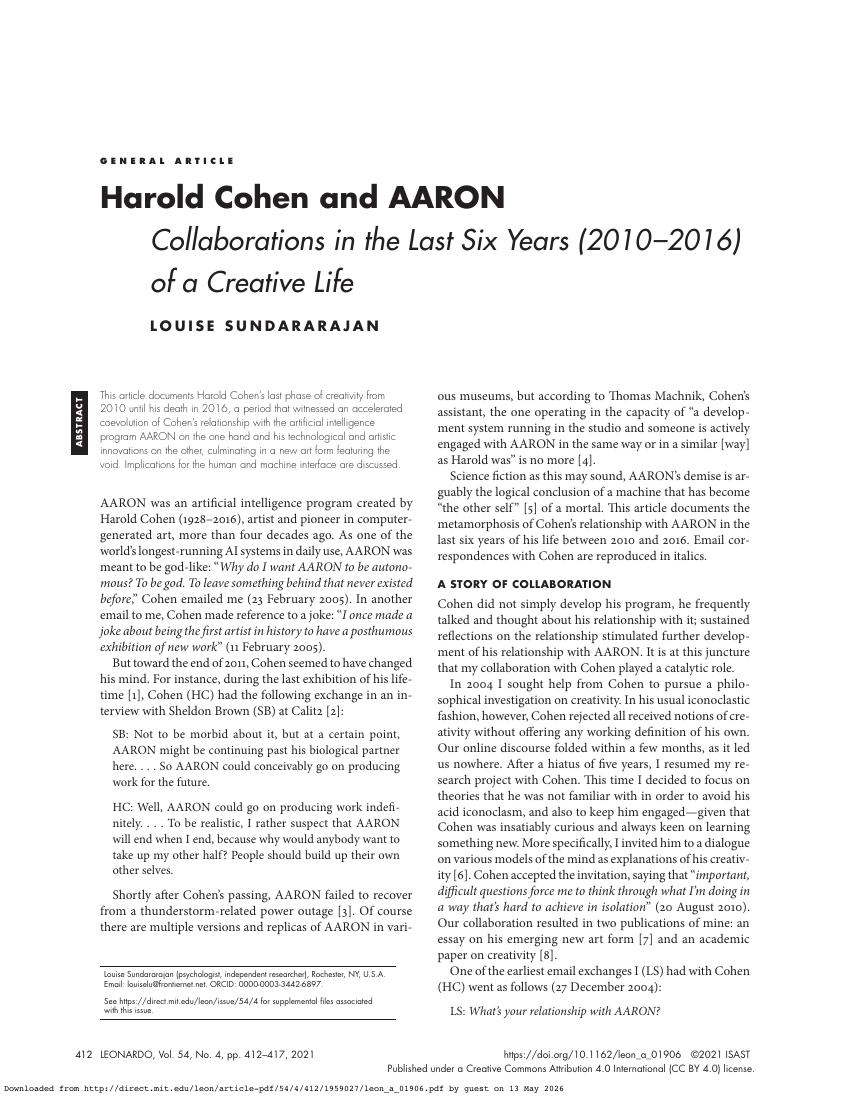
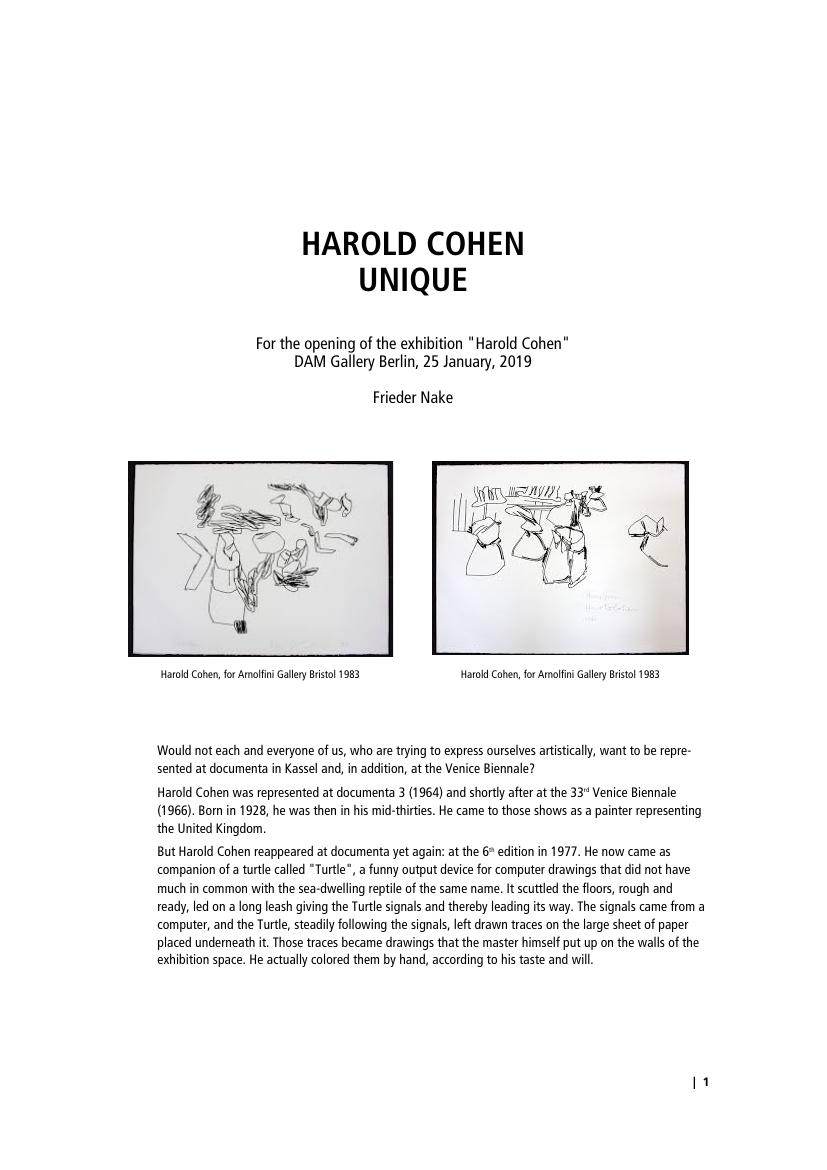
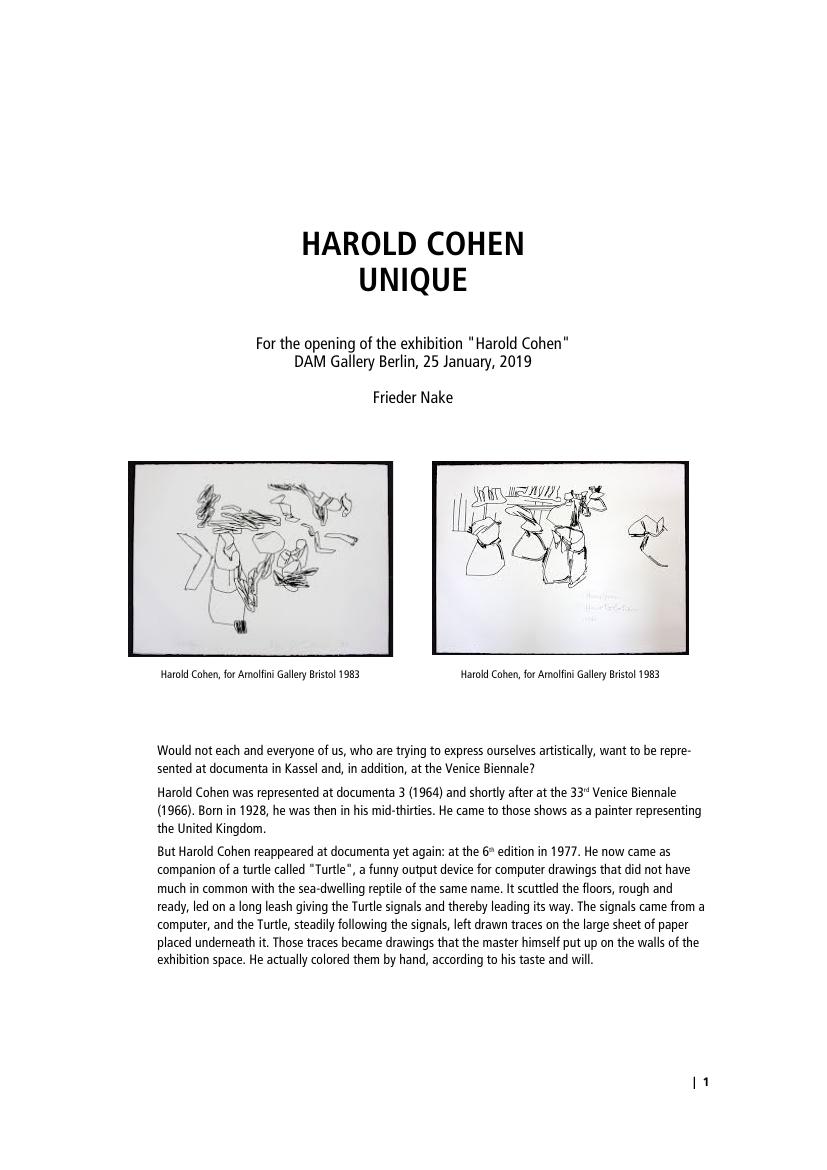
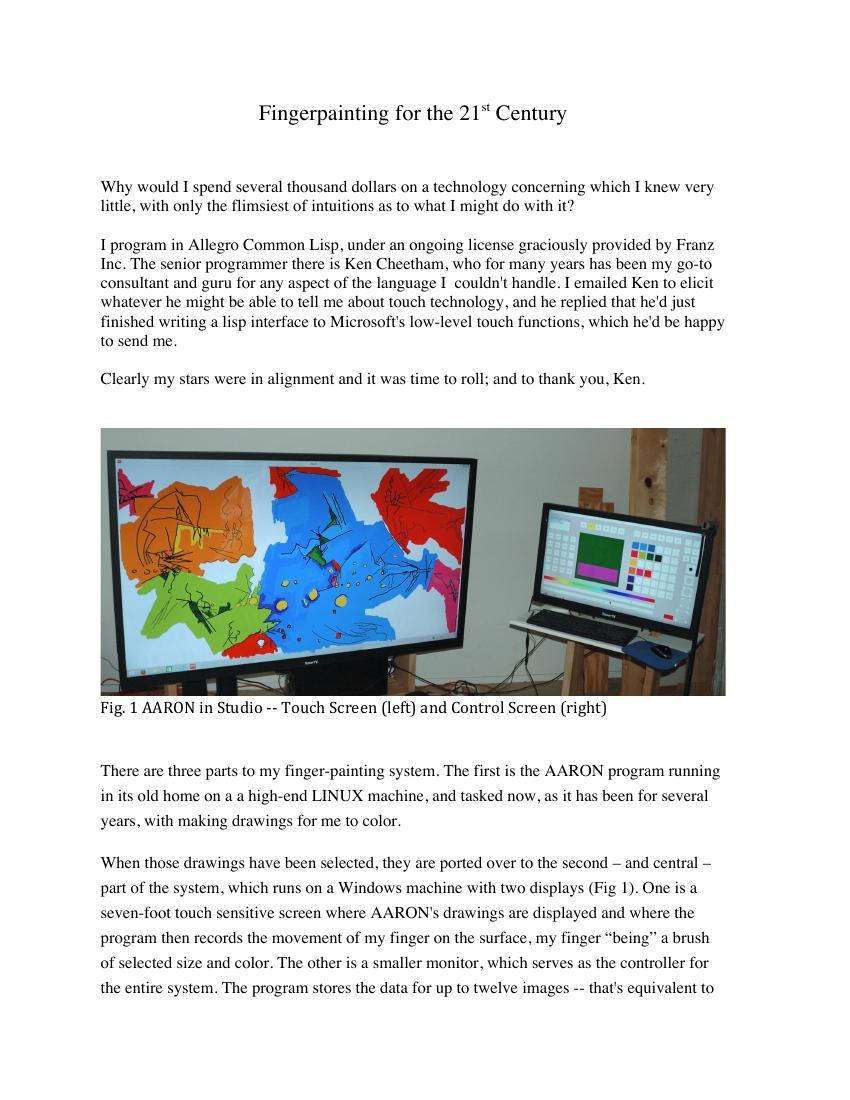
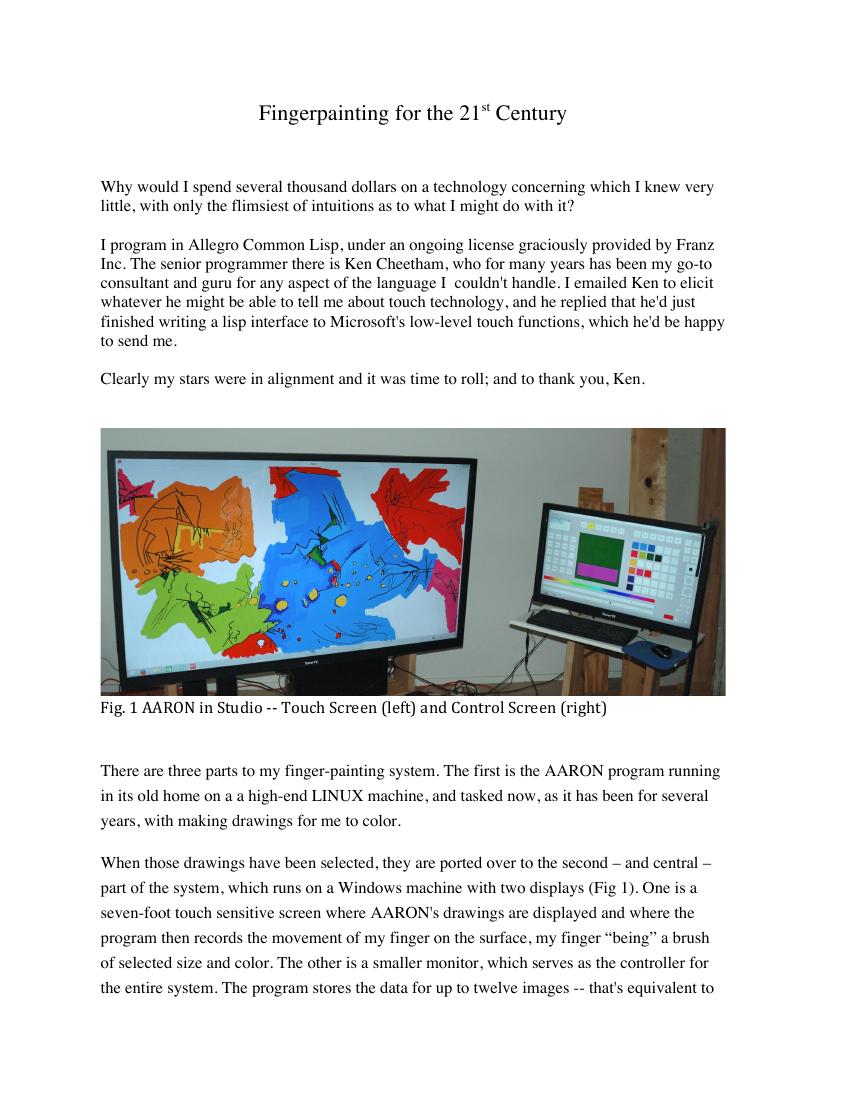
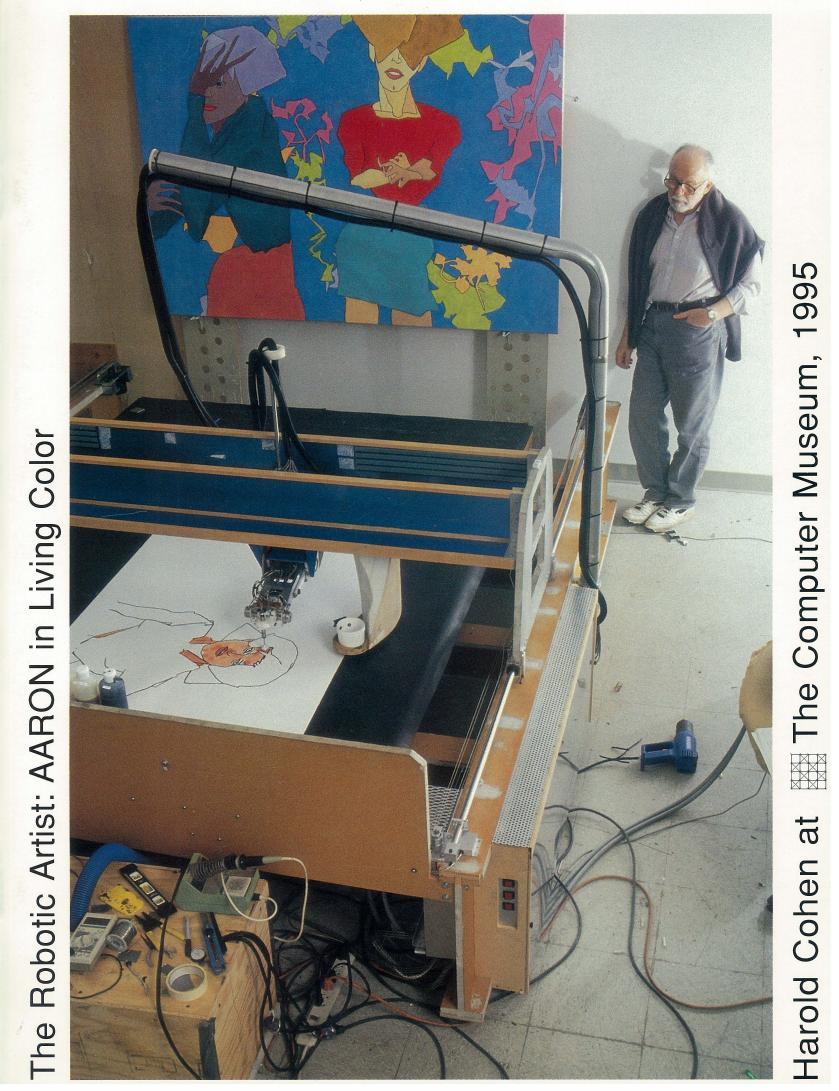
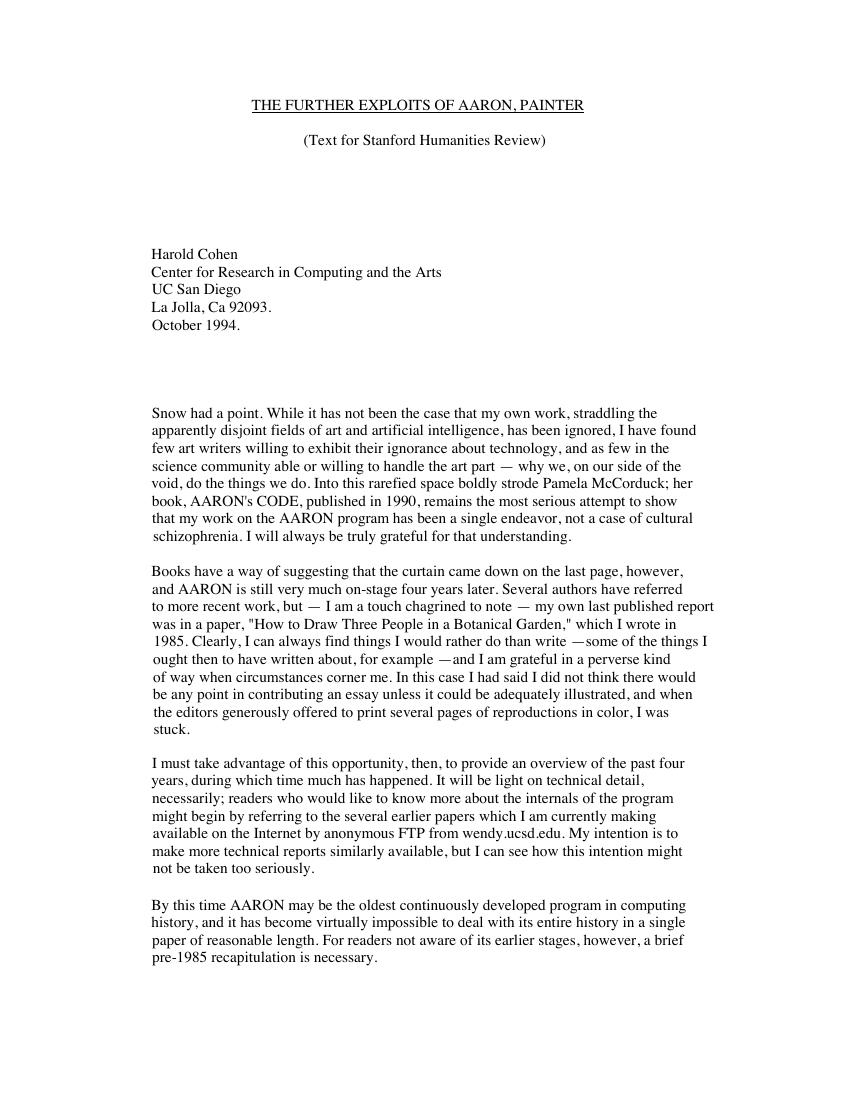
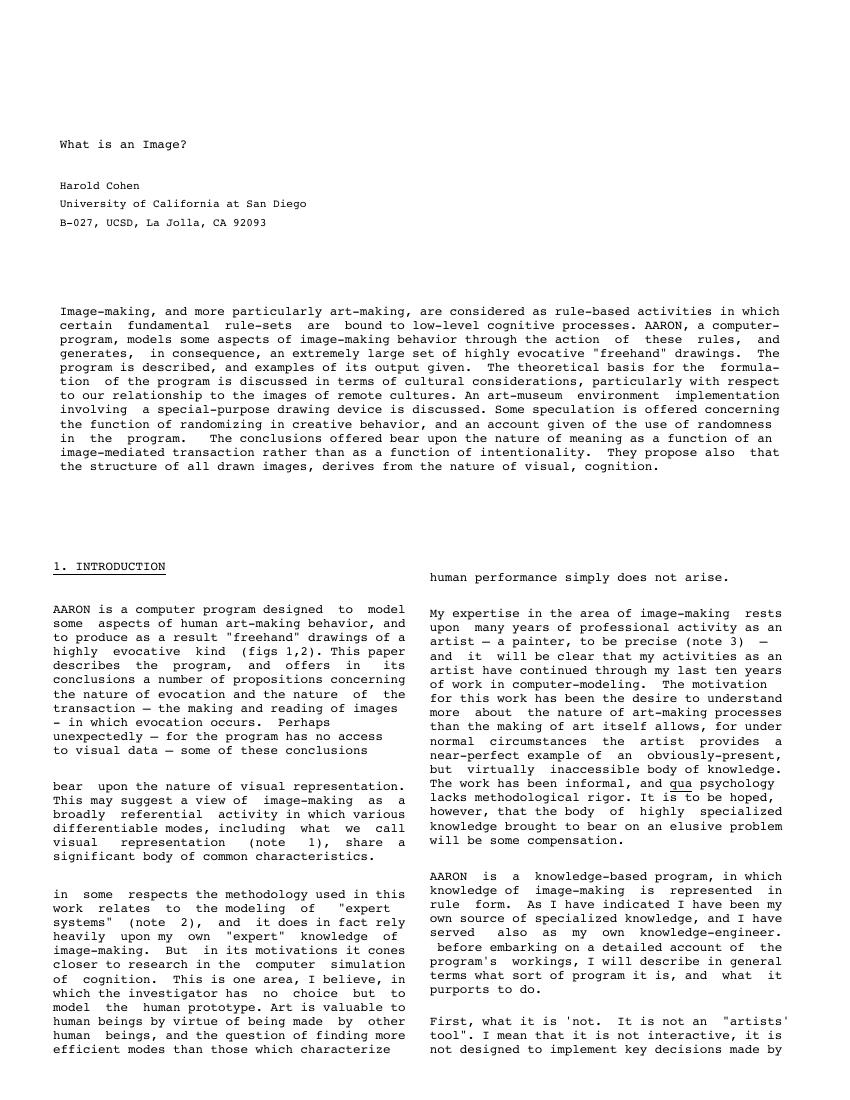
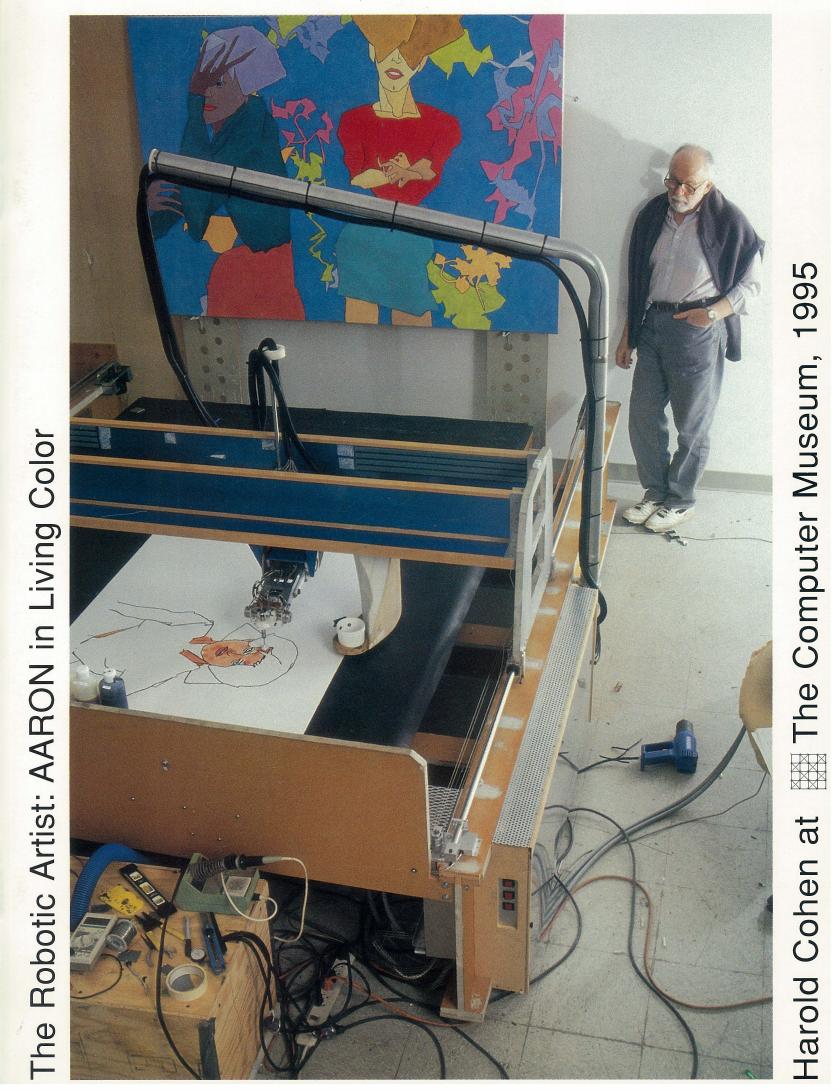
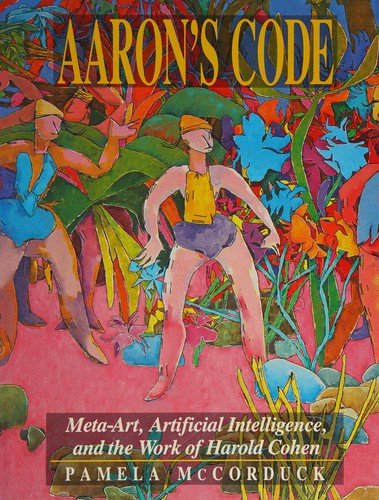
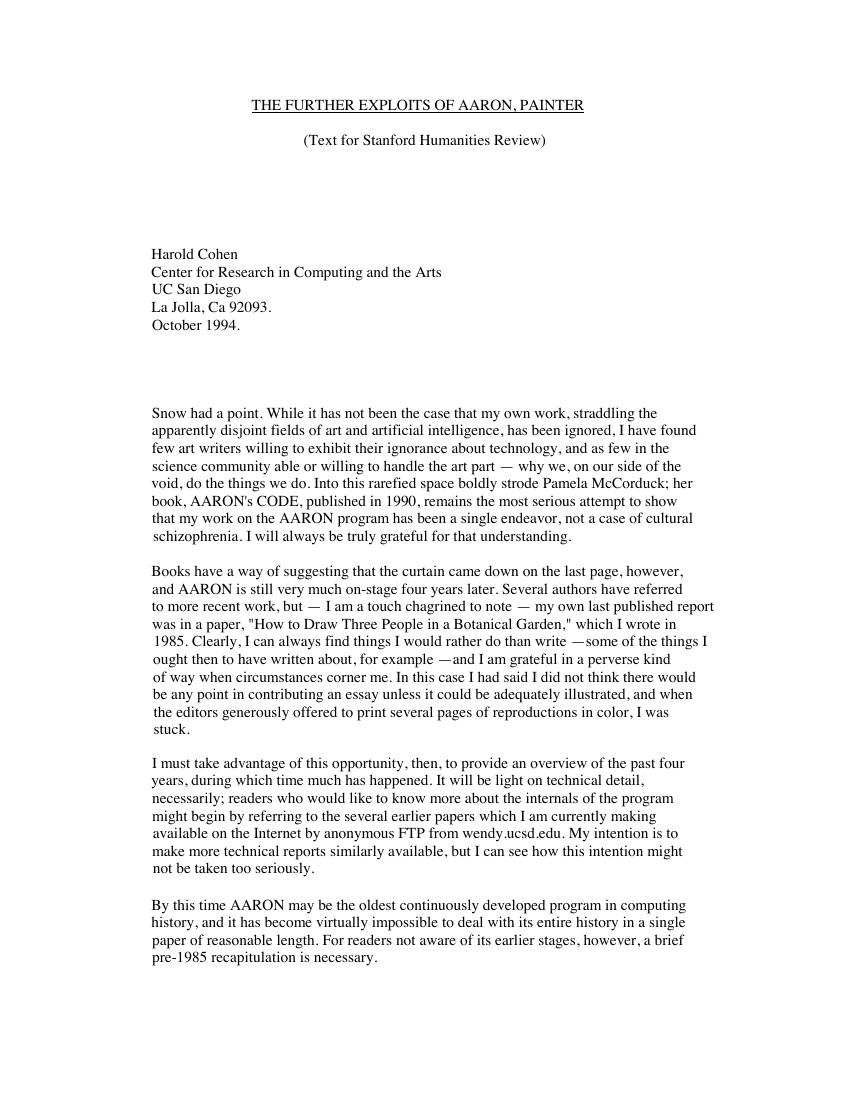
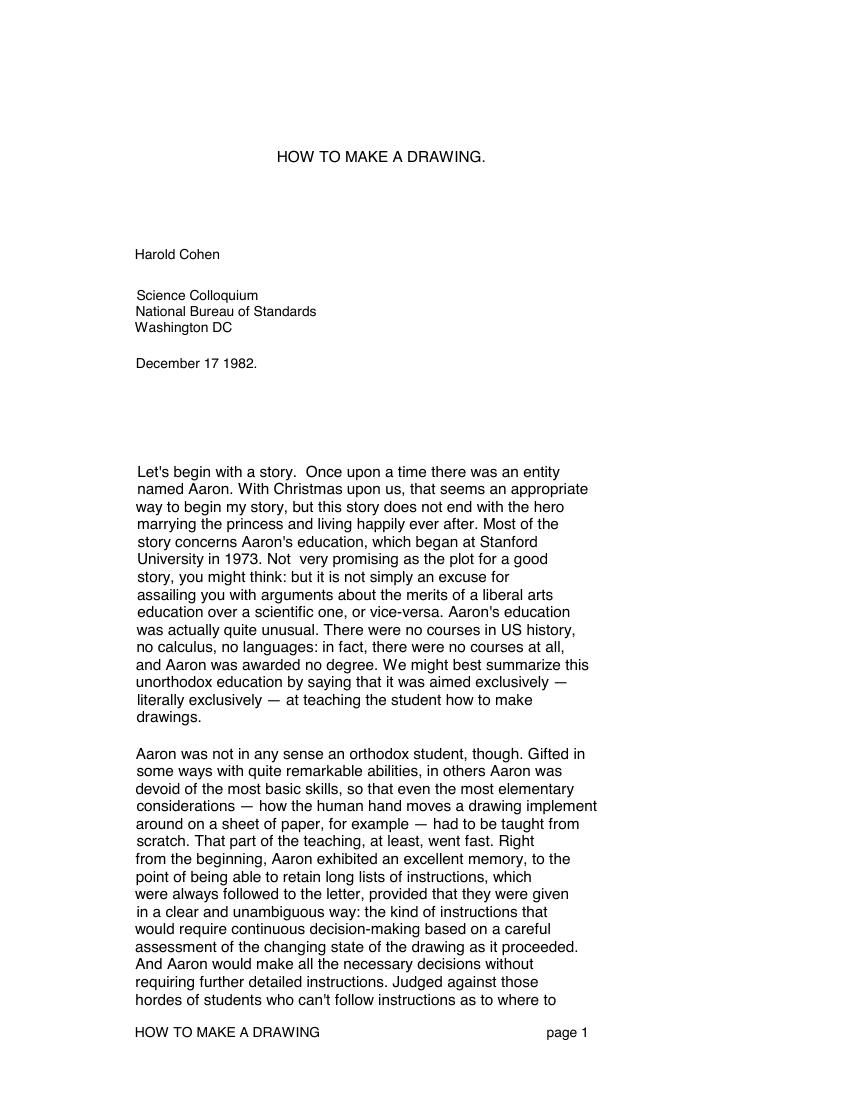
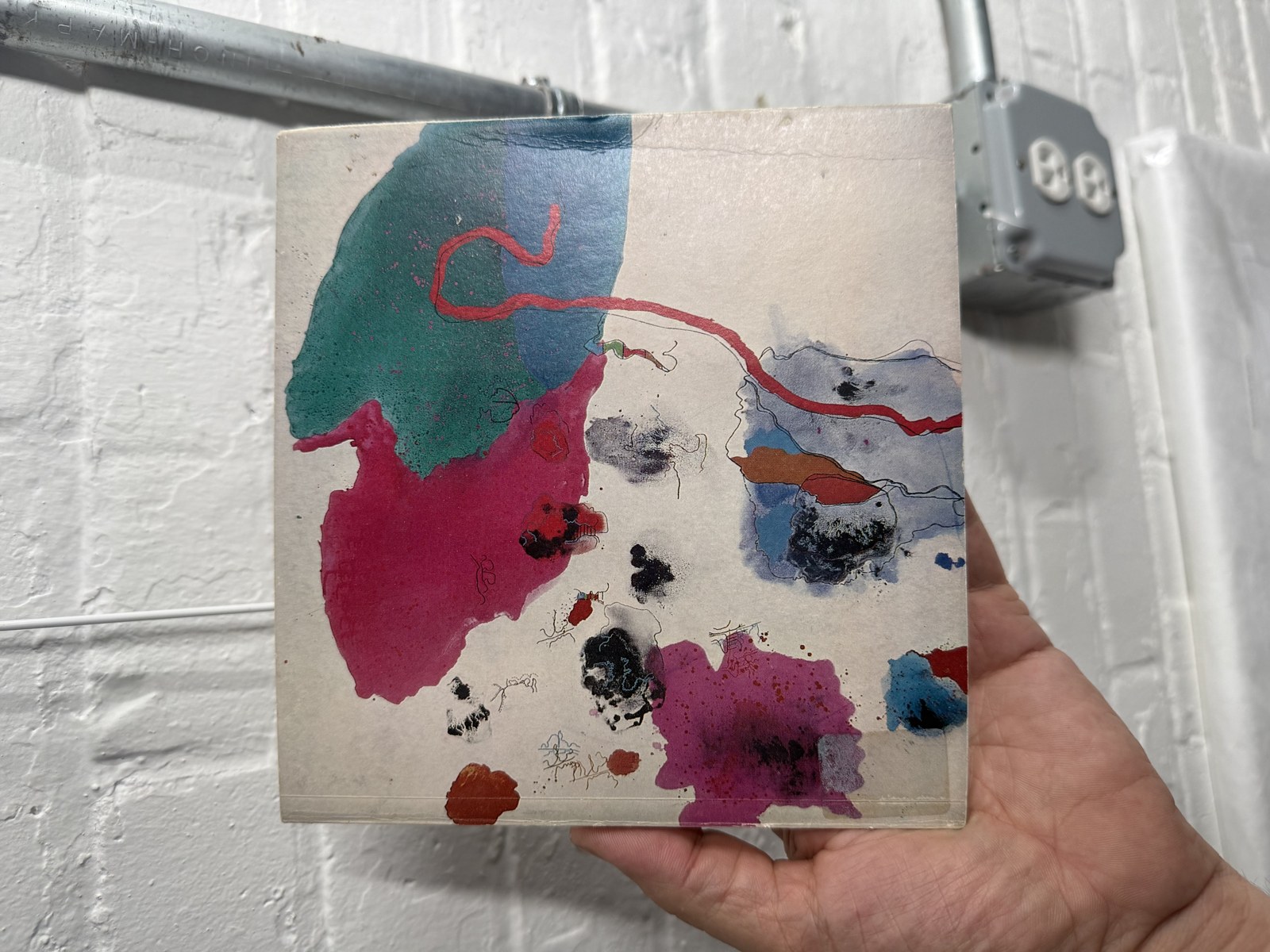
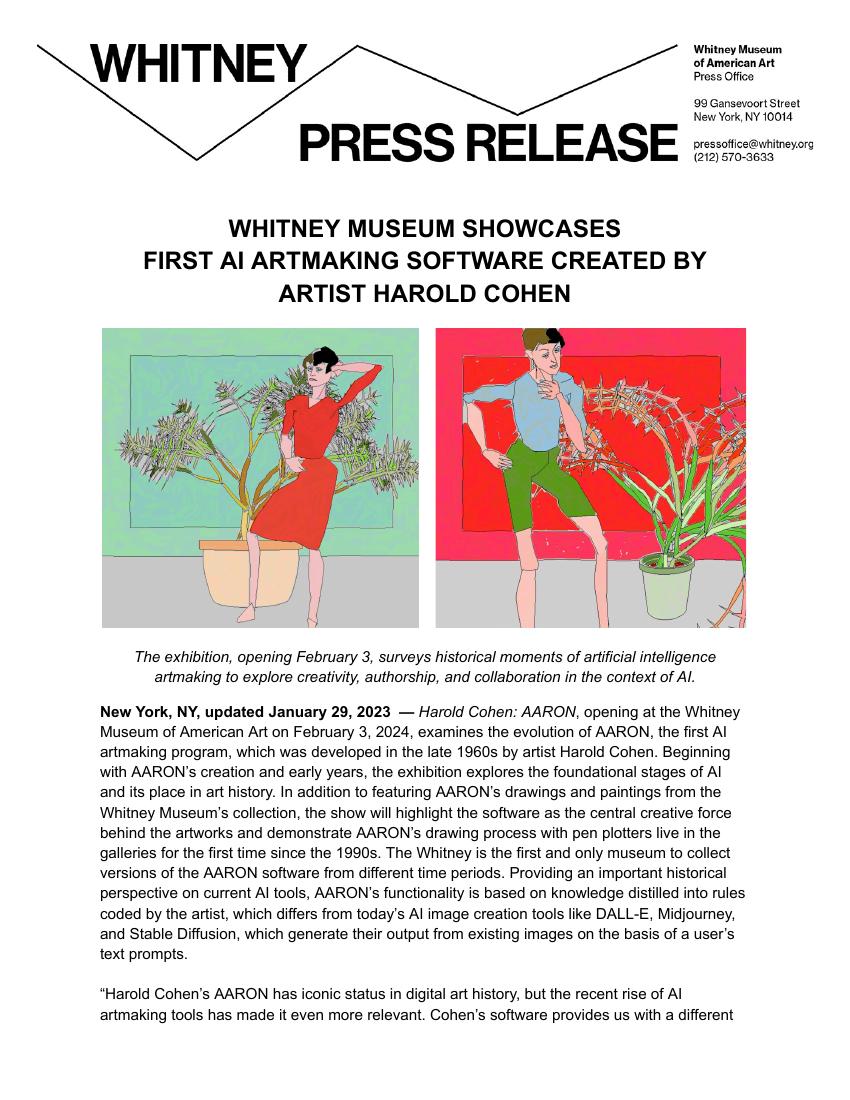
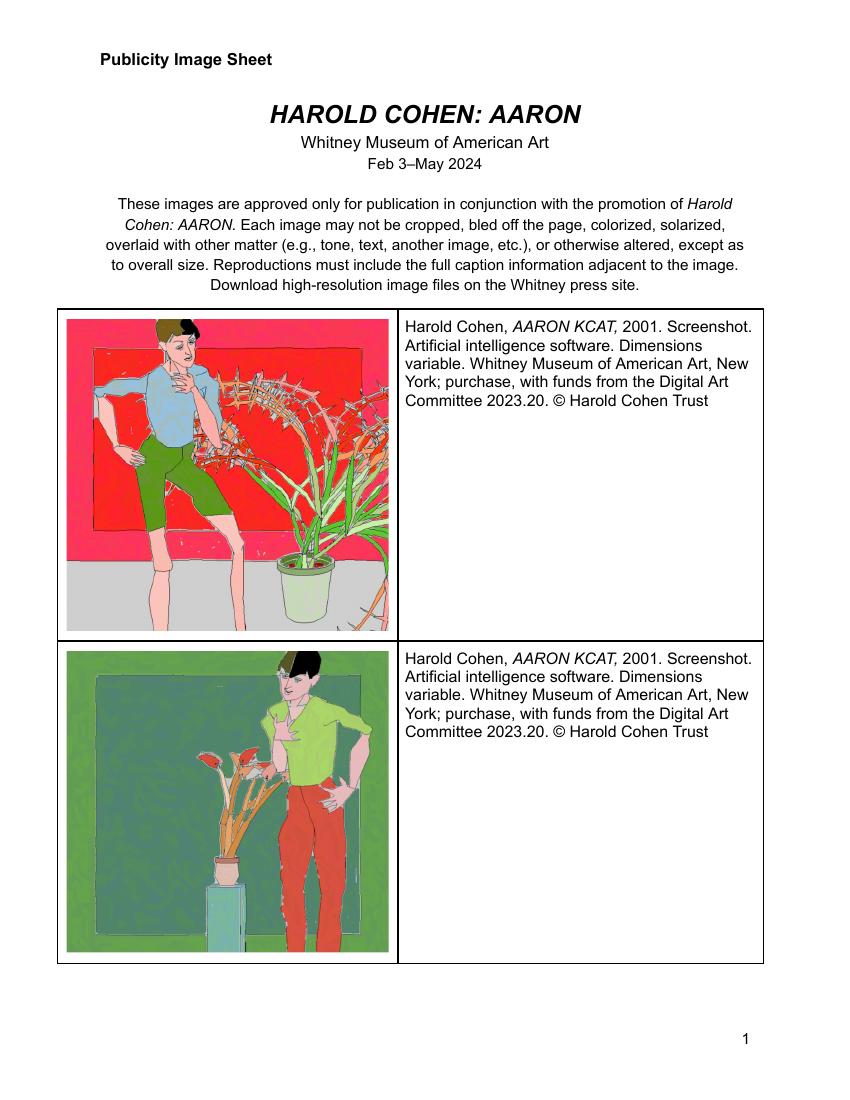
Harold Cohen (1928–2016) had two full art careers, and the second one changed what "artist" can mean. Born in London, he was a celebrated abstract painter — he represented Britain at the 33rd Venice Biennale in 1966 — before moving to UC San Diego in 1968, where he taught until 1994. There, and during a visiting-scholar stint at the Stanford AI Lab (1973–75), he began building AARON, the earliest artificial-intelligence program for making art, and then spent nearly five decades teaching it to draw: monochrome abstract "turtle" drawings in the 1970s (the little robot performed at his 1977 Stedelijk show and retired soon after), figures and plants drawn by plotters before live audiences in the 1980s (Arnolfini, Bristol, 1983), hand coloring, and eventually a machine that painted in color on its own. The Tate holds fifty-three of his works, and the Whitney's 2024 retrospective "Harold Cohen: AARON" confirmed what the plotter world knew all along. His estate is managed by the Harold Cohen Trust, with Gazelli Art House representing. I acquired the Cohens because I liked them, and then they grew on me more and more. I also built a turtle drawing machine of my own, which taught me a lot about how his worked.
Artist's website (haroldcohentrust.org) ↗Read more on Wikipedia ↗
7 physical works
Works in the collection


In the library