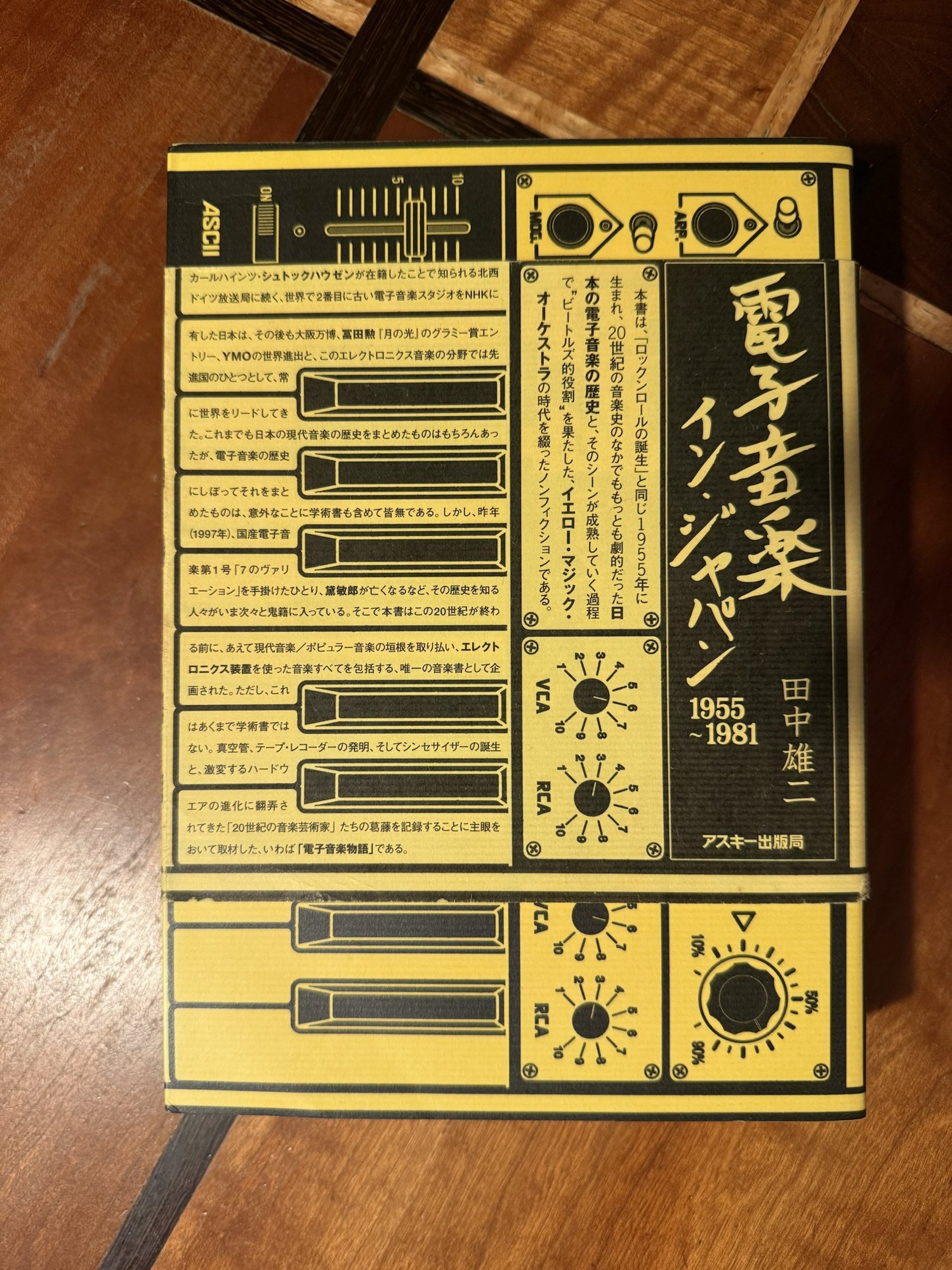
電子音楽イン・ジャパン 1955–1981 (Electronic Music in Japan 1955–1981)
- Author
- Yuji Tanaka
- Year
- 1998
- Publisher
- ASCII (アスキー出版局)
- Subjects
- Isao Tomita, Yellow Magic Orchestra
- Tags
- physical · japan · electronic music · nhk · history · synthesizers · techno-pop · ymo
Notes
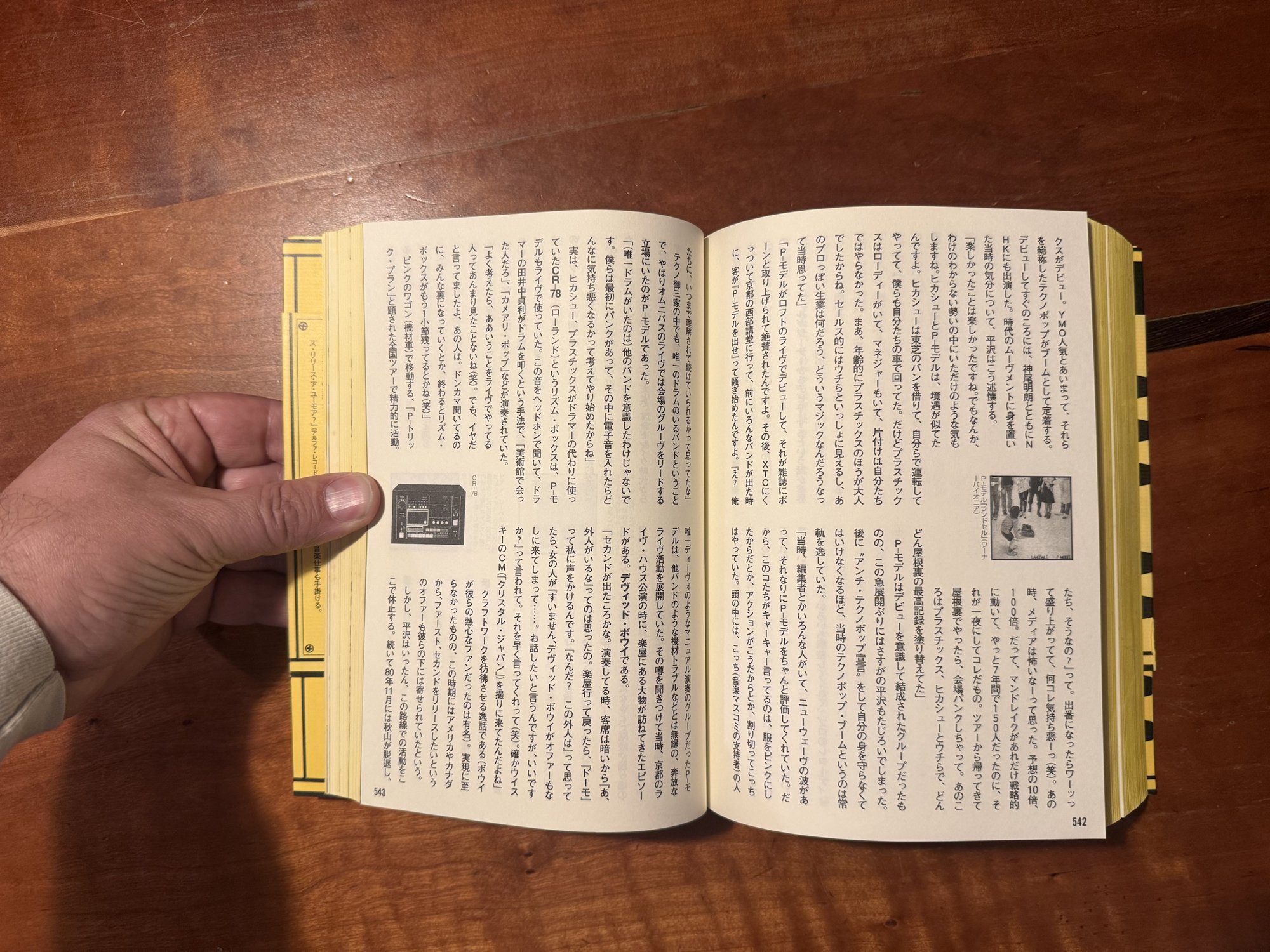
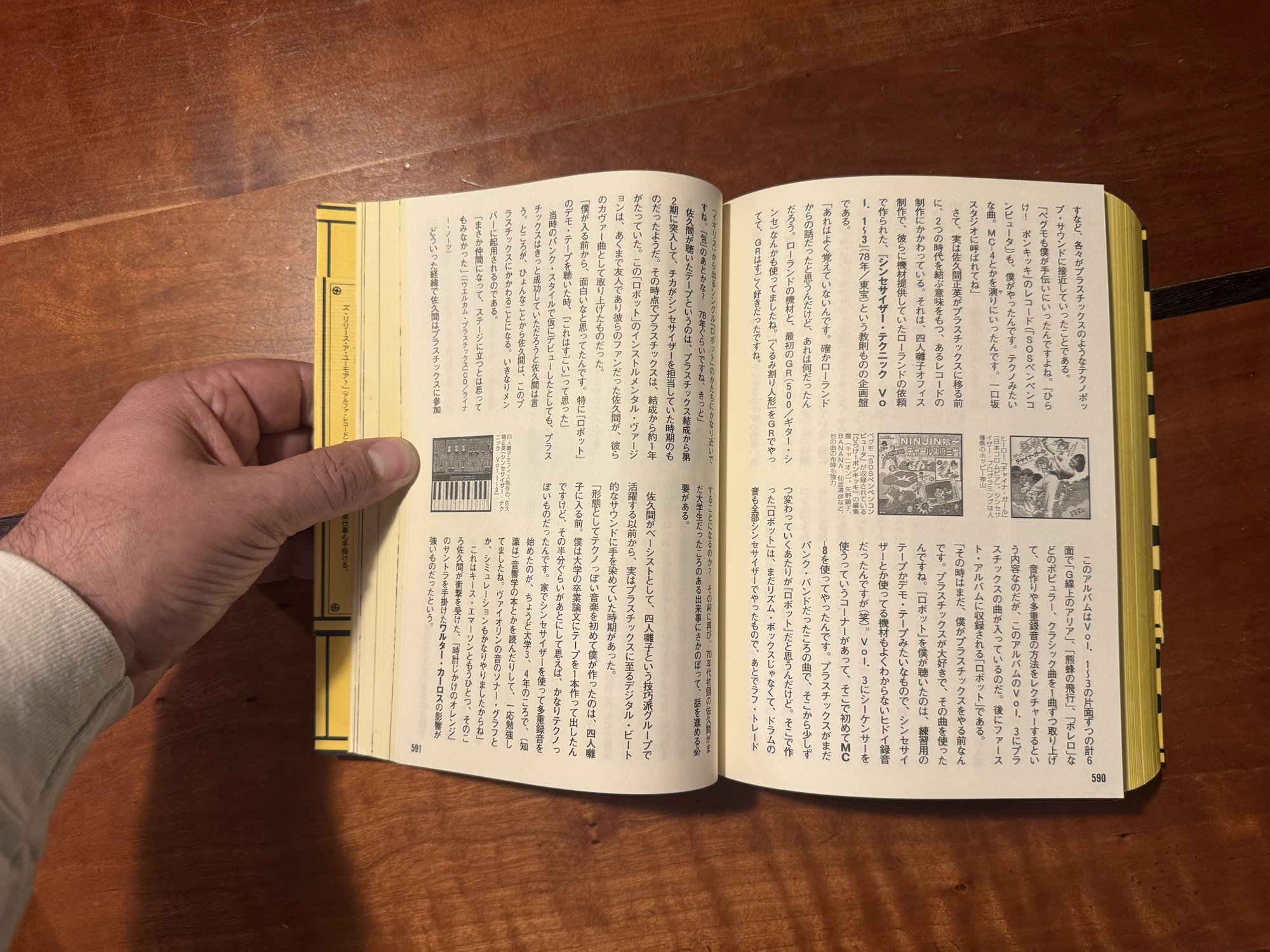
ASCII (アスキー出版局). Yuji Tanaka's history of Japanese electronic music from the NHK studio's founding in 1955 to 1981, built from interviews and documents — the reference companion to the NHK and Victor LPs bought the same week. Physical copy in the collection, on order. Bought 2026-10-16 through ZenMarket (womh52) from Mercari: item ¥2,800, ZenMarket commission ¥800. International EMS shipping not yet billed. IN TRANSIT — awaiting the Osaka warehouse and shipment to the USA. Received 3 November 2026 and photographed: the jacket and two spreads from the techno-pop chapters (pp. 542–543 and 590–591). ASCII (アスキー出版局), 1998; a thick small-format volume of some 600 pages in a yellow-and-black jacket drawn as a synthesizer panel (sliders, VCA and RCA knobs, a "MOG." and "ARP." module). The blurb sets out the premise: Japan had, at NHK, the world's second-oldest electronic-music studio after the WDR studio in Cologne where Stockhausen worked, and went on to lead the field with Expo '70, Tomita's Grammy-nominated Snowflakes Are Dancing and YMO's success abroad; yet no history of Japanese electronic music existed, academic or popular, and the people who knew it were dying — Toshirō Mayuzumi, co-author of Japan's first electronic piece, Seven Variations, died in 1997. Tanaka wrote the book to close that gap before the century ended, deliberately crossing the line between contemporary and popular music to cover everything made with electronic equipment: the vacuum tube, the tape recorder, the birth of the synthesizer, and the musicians buffeted by hardware that kept changing under them. He calls it an "electronic music story" built from interviews, not an academic study. An expanded edition followed as 電子音楽 in Japan (Aspect, 2001). The pages photographed are from the interview chapters on the late-1970s scene: Hikashu and P-Model at the start of the techno-pop boom, and Masahide Sakuma on Plastics, the Roland GR-500 and the Synthesizer Technique instructional records.