Transformations, étanche
- Author
- Vera Molnar
- Year
- 2010
- Publisher
- cneai=
- Subject
- Vera Molnar
- Tags
- vera-molnar · artist-book · computer-art · concrete-art · physical · owned
Notes
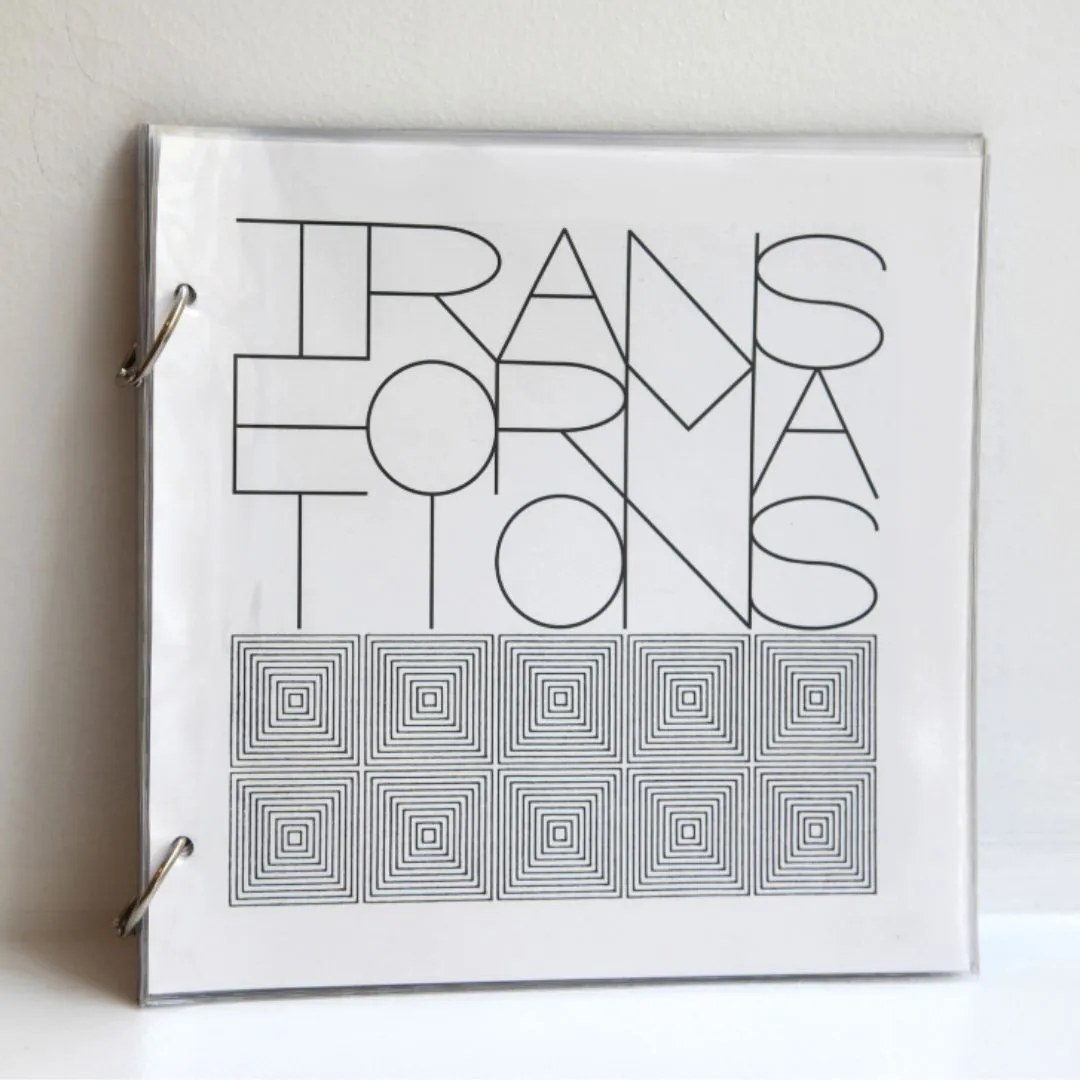
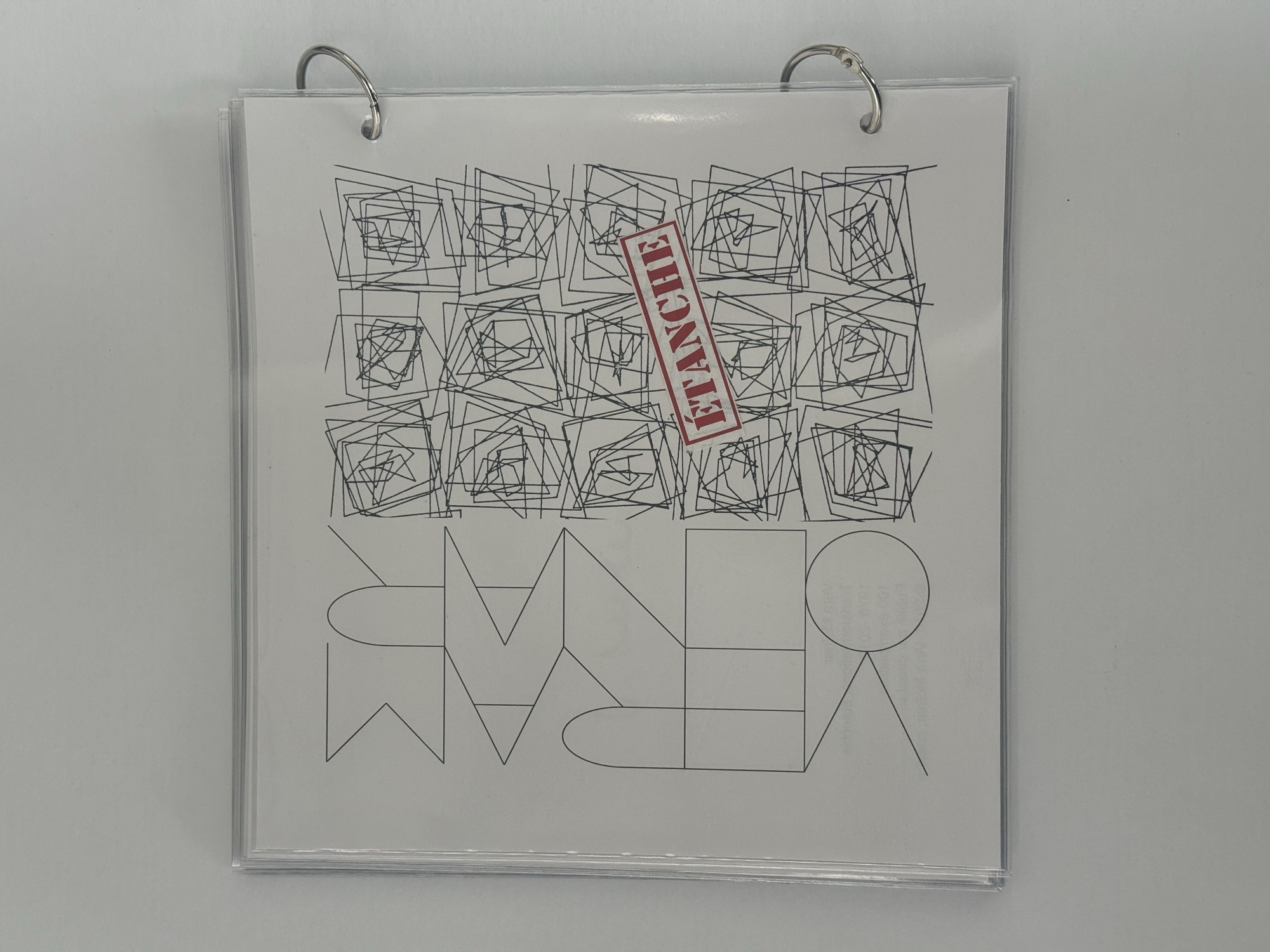
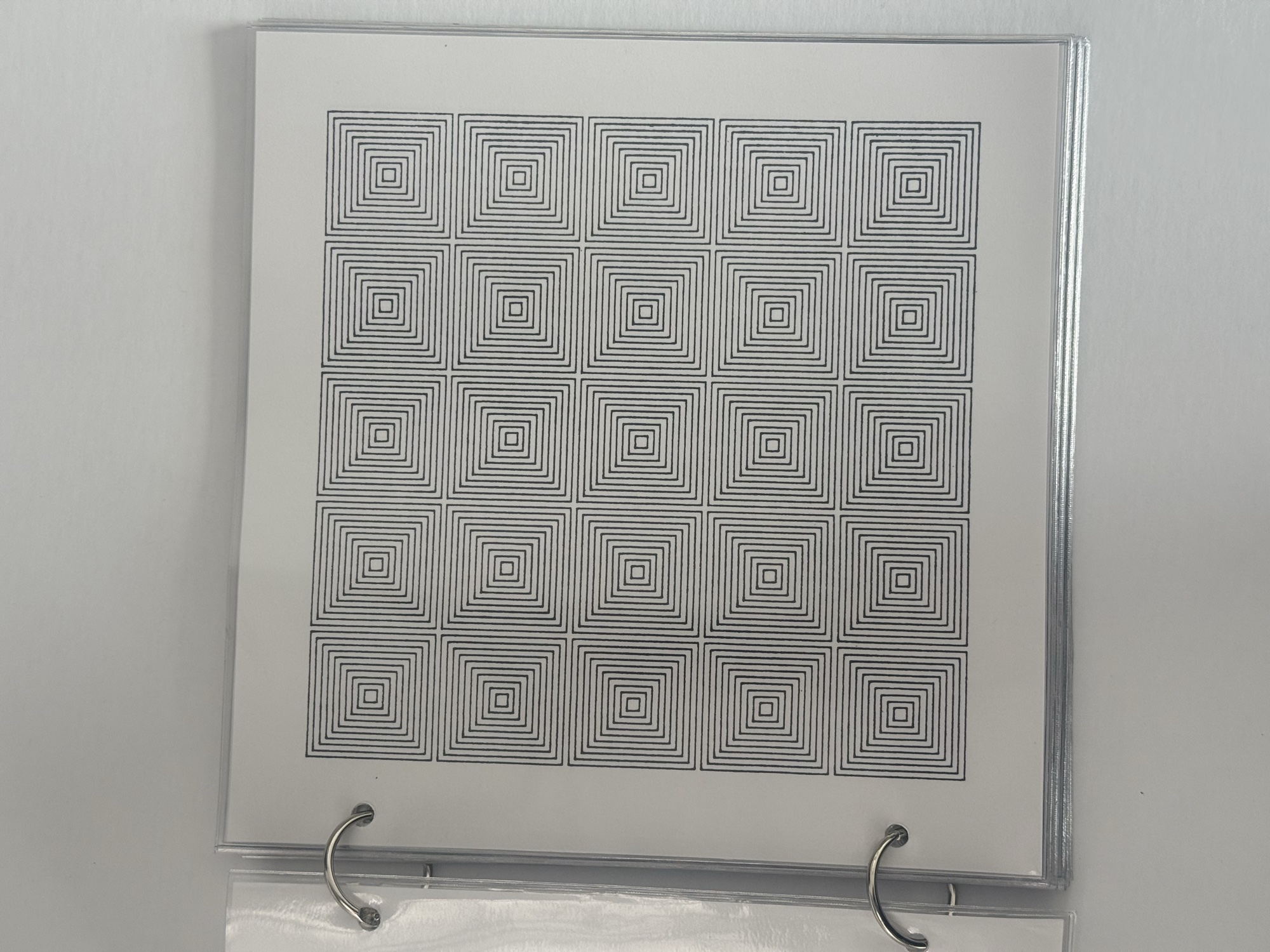
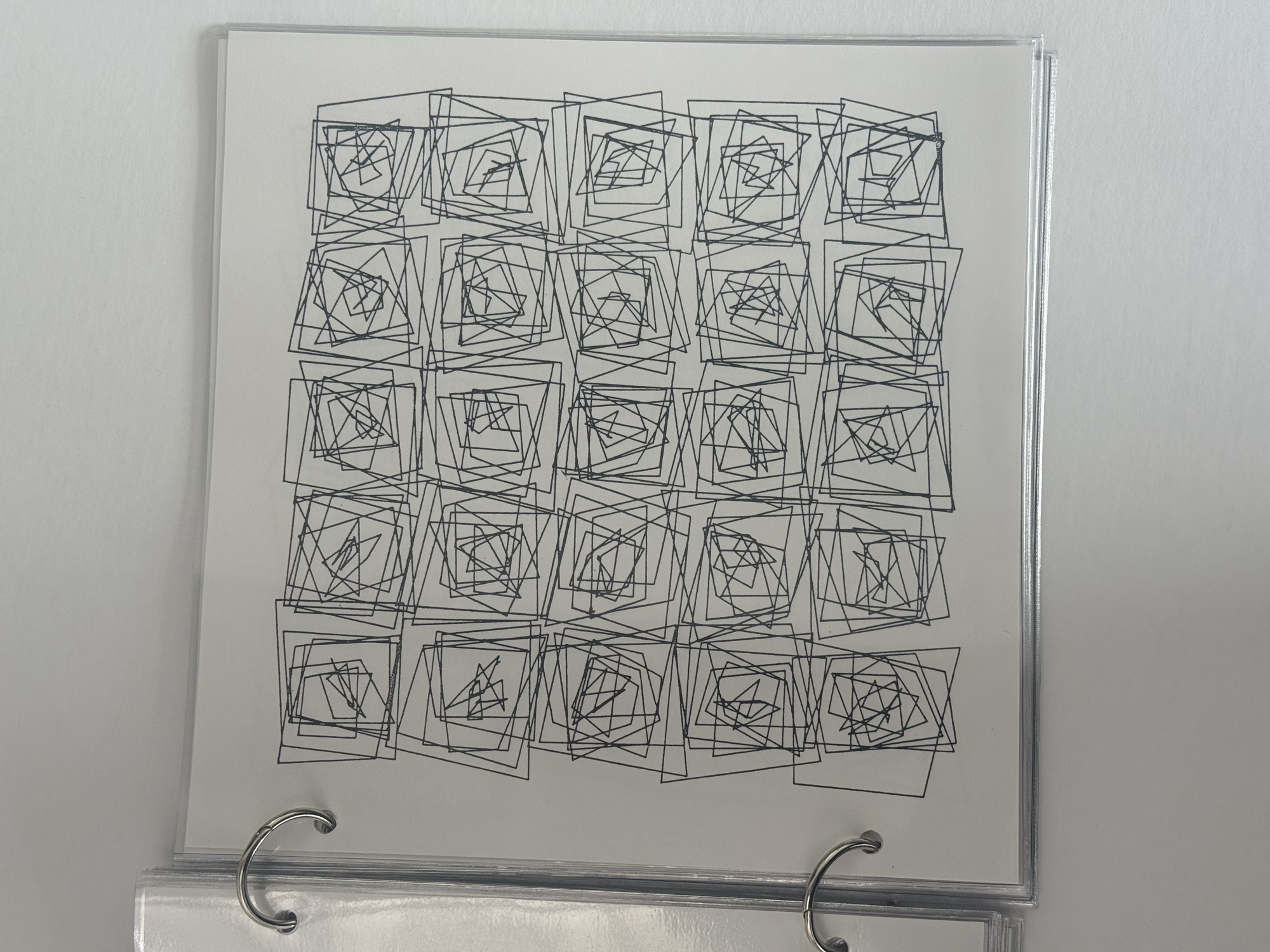
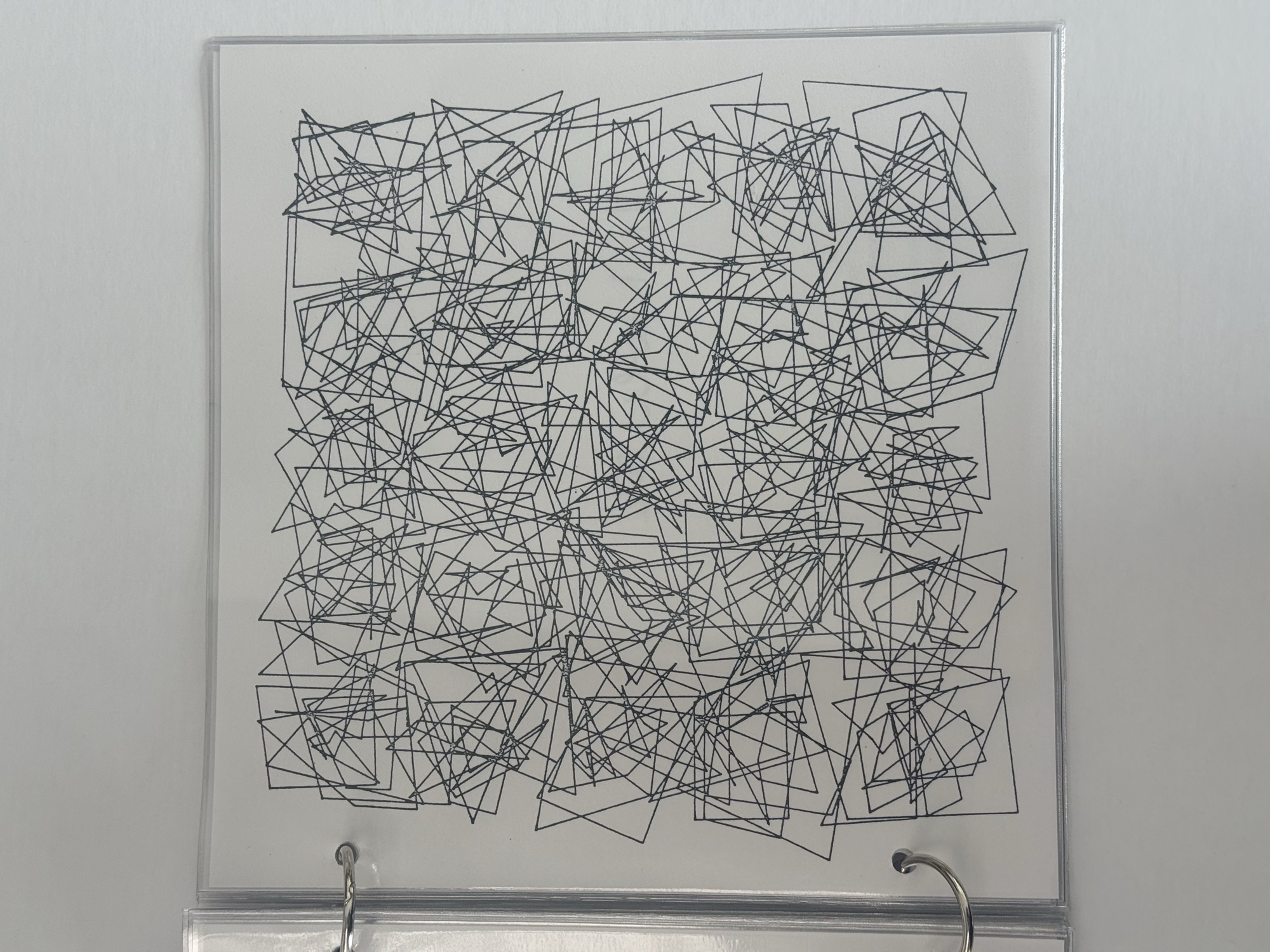
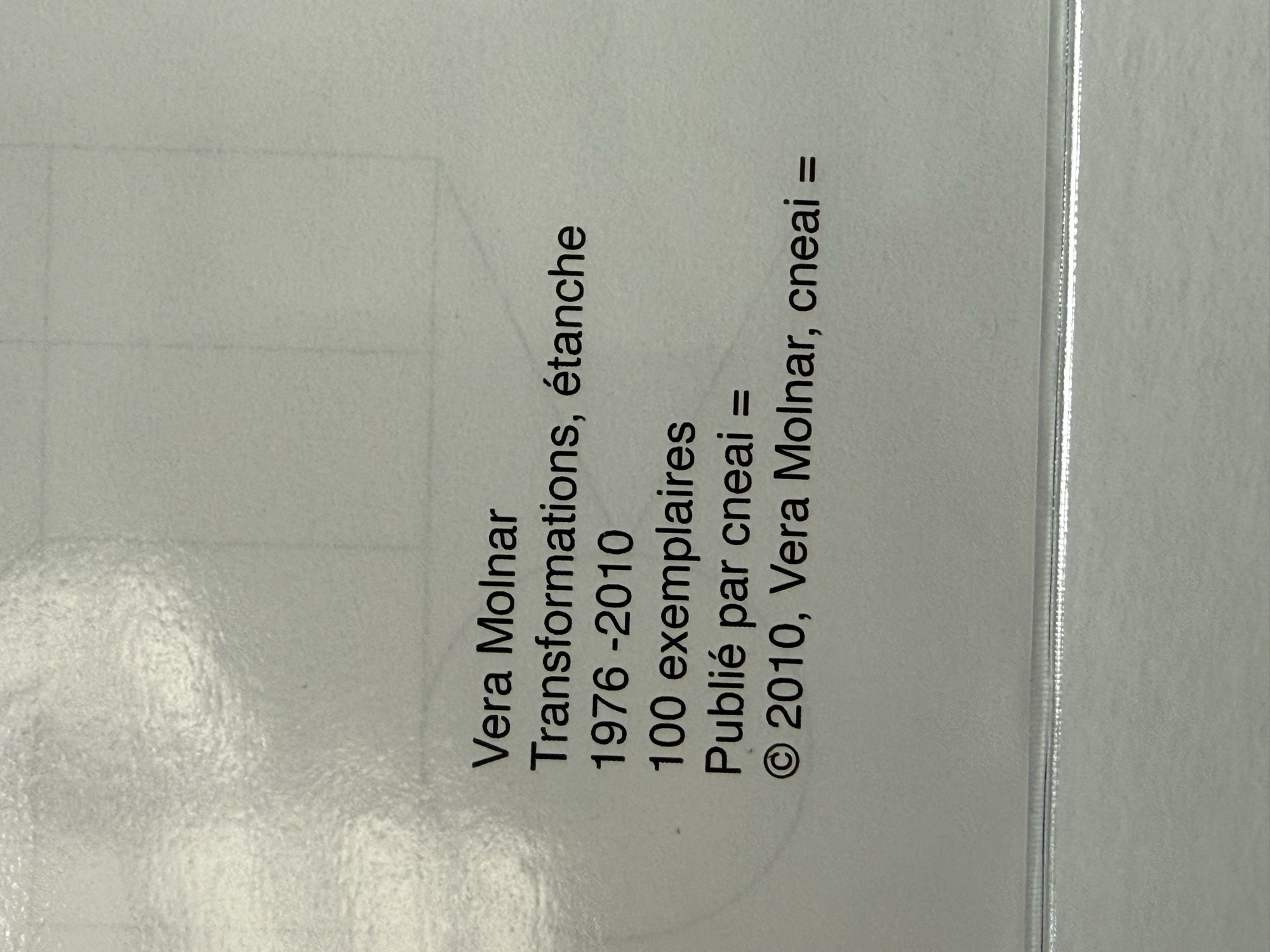
Vera Molnar — Transformations, étanche, 2010. Published by CNEAI, Chatou, and released around 2010–2011 in an edition of 100 signed copies. Approximately 22 × 21.5 cm; 12 sheets including the cover, printed in black, with each sheet enclosed in a transparent plastic sleeve and the pages held together by two metal rings. The title étanche means “watertight” or “waterproof,” a literal reference to the book’s unusual plastic-sleeved construction. Transformations, étanche is a reworking of the catalogue Molnar made for Transformations, her first solo exhibition, held at the Concourse Gallery at the Polytechnic of Central London from June 10–July 2, 1976. Molnar produced the original catalogue herself in a small number of photocopied copies. More than thirty years later, she returned to that object with CNEAI and transformed the ephemeral exhibition catalogue into a formal artist’s book and multiple. The images document an important early series from Molnar’s computer practice. Beginning with regular grids of concentric squares, she introduced successive displacements and variations, gradually moving the composition from geometric order toward disorder. Molnar had been making computer-generated work since 1968, and Transformations exemplifies the iterative working method that became central to her art: establish a simple rule or visual system, alter one or more parameters, observe the result, and continue through a sequence of variations. The original Transformations drawings were developed interactively using a computer and CRT graphics terminal and then produced as plotter drawings. Closely related sets survive today, including a 21-drawing group in the Tate collection and a 23-drawing version in the Carl & Marilynn Thoma Foundation collection. Research by Molnar scholar Zsofi Vályi-Nagy has shown that Molnar reran the computer sequence because the lines in the first plotter drawings were too thick to reproduce adequately in the 1976 catalogue. The second run produced subtly different images because pseudo-random values affected the coordinates. The book therefore occupies an unusual position in the history of the work: the computer generated material for the catalogue, but the requirements of printing the catalogue in turn caused Molnar to return to the computer and generate another version of the artwork. The book format is particularly appropriate to Molnar’s serial practice. Turning the pages allows the viewer to move backward and forward through incremental transformations, echoing the way Molnar herself examined successive variations on a computer display. Transformations, étanche is therefore more than a facsimile of an early catalogue: it reconnects a physical artist’s book to Molnar’s first solo exhibition and to a formative period in the development of computer-assisted, iterative and generative art. Publication: CNEAI, Chatou, France Date: 2010; public release documented around 2011 Edition: 100 signed copies Format: 12 sheets including cover, transparent plastic sleeves, two-ring binding Dimensions: approximately 22 × 21.5 cm Related exhibition: Transformations, Concourse Gallery, Polytechnic of Central London, June 10–July 2, 1976