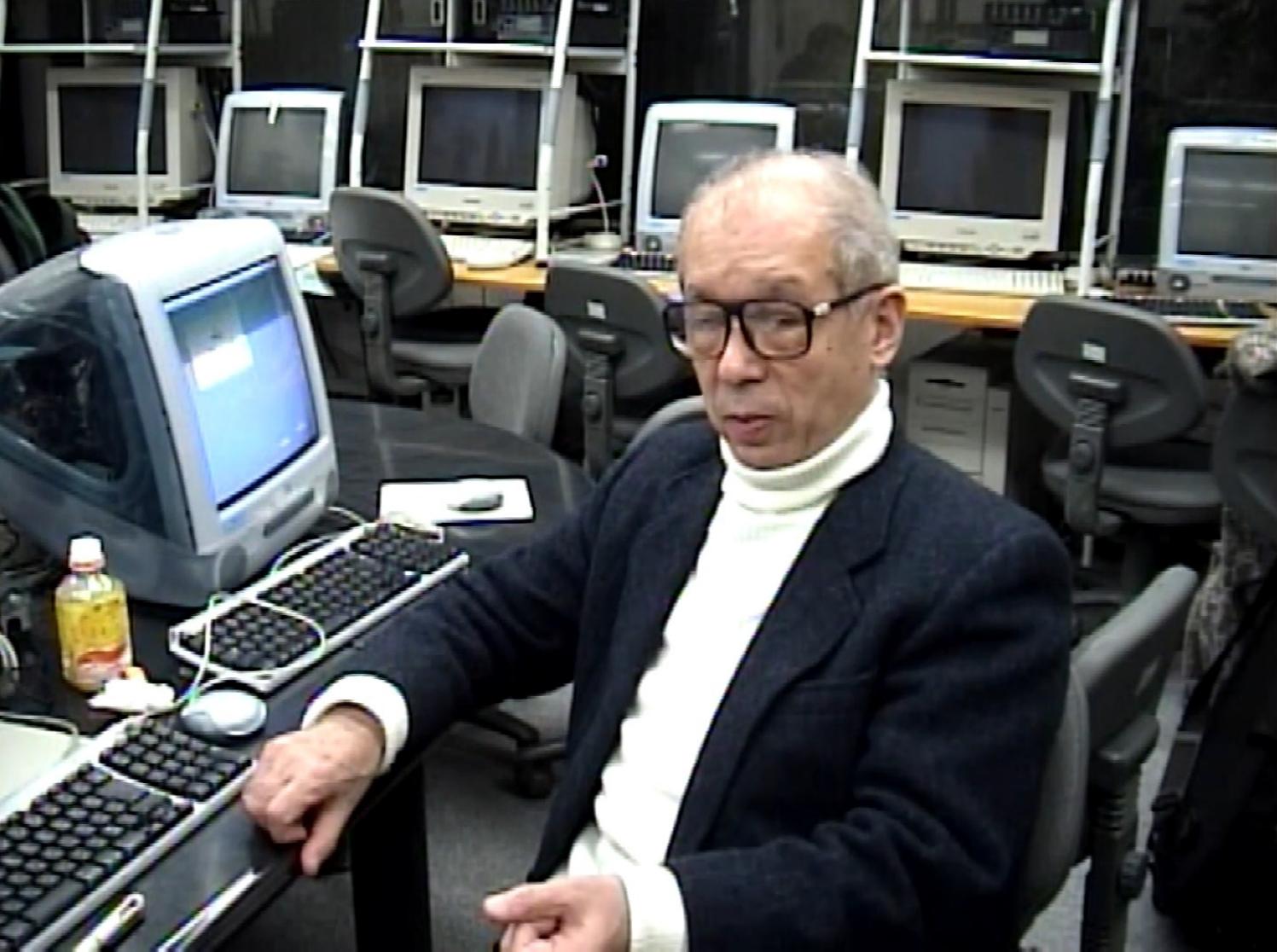
端山貢明語録/情報権を宣言しよう (Sayings of Hayama Kōmei: Let Us Declare an Information Right)
- Author
- Komei Hayama
- Year
- 2003
- Subject
- Komei Hayama
- Tags
- japan · hayama archive
Notes
From the 端山貢明アーカイブ (Hayama Kōmei Archive), item 9967 in the 講演・講義 category, registered 2022-10-04: https://d-commons.net/hayama/?c=&p=9967. Published by the 端山貢明アーカイブプロジェクト (Hayama Kōmei Archive Project), directed by 前川道博 (Michihiro Maekawa) of Nagano University, on the D-Commons platform, and licensed CC BY (表示). The source documents come from the 端山文庫, the papers kept in Hayama's laboratory at Tohoku University of Art and Design, digitised by the project with the agreement of his family; his autograph scores were given to the University History Archives of the Tokyo University of the Arts in 2026. Source: An entry in the archive's 端山貢明語録 (Sayings of Hayama Kōmei) series, published as a six-minute video excerpt on YouTube (https://youtu.be/WaarIYjmpVc). The PDF is a single frame from that video, taken in the same computer room and session as item 9966.. Dated: recorded 31 January 2003; the extract runs about six minutes. The archive publishes this item as 1 separate page scan rather than as a PDF; the download here was assembled from those scans in page order, each taken at the higher of the two resolutions the archive serves. The second extract from the Mediatheque Study Group conversation of 31 January 2003, and the one the archive singles out as prescient. Asked how creative work should be handled in a networked society, Hayama declines to start from copyright. Binding works with the existing apparatus of 著作権 is the wrong premise; the new premise should be that everything is made public so far as it does not infringe anyone's rights, and the right that needs declaring is not an author's right over a work but an information right (情報権) belonging to everyone. This follows directly from the position he had held since the 1970s. If the place at which information completes itself has moved from the sender to the receiver — the lesson he drew from Cage's 4'33" and restated for twenty years as the agency of the access side (アクセス側の主体性) — then a legal system built to protect the sender's control of a finished work is describing a world that no longer exists. A right of access, and a default of openness, is the legal form that the agency of the access side requires. The archive's cataloguer notes that the idea anticipates what is now called open data, and that this makes it one of Hayama's sharper formulations. The document itself is six minutes of recorded conversation, represented here by a single frame and a caption; there is no text. Its interest for a library is that it dates and attributes an open-access argument made in Japan in early 2003, well before the vocabulary of open data existed, by a figure whose starting point was neither law nor computing but composition. People named: 端山貢明 (Hayama Kōmei), ジョン・ケージ (John Cage, implied through 4'33"). Noted: The PDF holds no text; the substance comes from the archive's catalogue note for the video. The filing term 語録 (sayings) is the archive's; the object is a video excerpt, not a printed quotation sheet. The reading of this as a continuation of the 4'33" argument is an inference from item 54988, not something the catalogue note states. The archive's judgement that the idea anticipates open data is the cataloguer's, not Hayama's own claim.