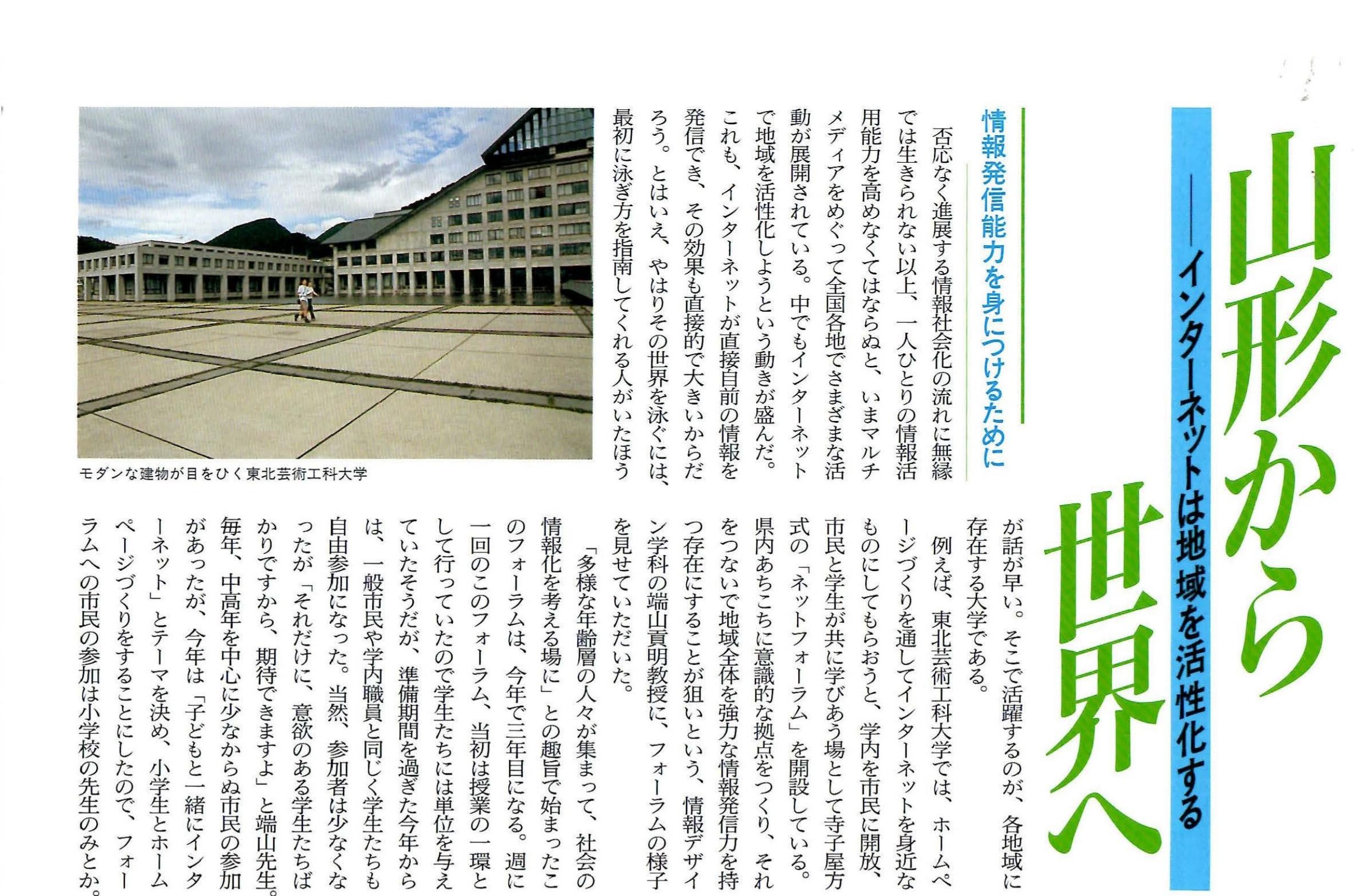
山形から世界へ―インターネットは地域を活性化する (From Yamagata to the World: The Internet Revitalises the Region)
- Author
- Komei Hayama
- Year
- 1998
- Subject
- Komei Hayama
- Tags
- japan · hayama archive · essay
Notes
From the 端山貢明アーカイブ (Hayama Kōmei Archive), item 9881 in the 東北芸術工科大学 category, registered 2022-10-02: https://d-commons.net/hayama/?c=&p=9881. Published by the 端山貢明アーカイブプロジェクト (Hayama Kōmei Archive Project), directed by 前川道博 (Michihiro Maekawa) of Nagano University, on the D-Commons platform, and licensed CC BY (表示). The source documents come from the 端山文庫, the papers kept in Hayama's laboratory at Tohoku University of Art and Design, digitised by the project with the agreement of his family; his autograph scores were given to the University History Archives of the Tokyo University of the Arts in 2026. Source: 『GRAPHICATION』 no. 98, August 1998, special feature 「電子知識社会のゆくえ」, pp. 14–16; published by Fuji Xerox Co., Ltd. (富士ゼロックス株式会社). Bylined 編集部 (the editorial staff); reproduced in the archive with the publisher's permission.. Dated: August 1998 issue. The archive publishes this item as 4 separate page scans rather than as a PDF; the download here was assembled from those scans in page order, each taken at the higher of the two resolutions the archive serves. A reported visit by the GRAPHICATION editors to the Net Forum (ネットフォーラム), the weekly open workshop Hayama ran as professor of information design at Tohoku University of Art & Design in Yamagata. The university opens its computer rooms to townspeople so that citizens and students learn together in what Hayama calls a terakoya (寺子屋, the village schoolhouse of the Edo period) arrangement; the aim is to plant conscious nodes around the prefecture and link them until the region becomes a strong transmitter of information. 1998 was the forum's third year. It had begun inside a credit-bearing class; once the preparatory phase ended, students joined on the same free-attendance footing as citizens and staff, which cut the numbers but, Hayama says, left only the motivated ones. That year's theme was 「子どもと一緒にインターネット」 (making web pages with primary-school children), so the only townspeople taking part were schoolteachers. The reporting is close and physical: a 5.30 p.m. start in a room of Macintosh terminals on a Fuji Xerox LAN, cherries brought in by a student, the assistant Maekawa Michihiro scanning photographs and coaching HTML, sessions running past nine. Students built pages from whatever they cared about — an environmental piece, a family introduction, a recycling-centre visit; a Chinese exchange student travelled to Tokyo to video Shinjuku for 「私の見た新宿」; another wanted to serve his home island of Himeshima in Oita; one set out to advertise the canteen's chilled Chinese noodles to the world, which supplies the closing joke and the third section title. Maekawa's public-domain tools PopCorn and PushCorn let beginners generate HTML without writing markup, and the article prints the PopCorn address. The piece matters less for theory than as the closest record in this batch of Hayama's regional-network thinking in practice; it notes that the same group supplies the networking section of the Yamagata International Documentary Film Festival. Contents as the document gives them: 情報発信能力を身につけるために (Acquiring the capacity to transmit information) · ホームページをつくる楽しみ (The pleasure of making a home page) · やがて空飛ぶ「冷やし中華」の日が…… (And one day the chilled Chinese noodles will fly…). People named: 端山貢明 (Hayama Komei), 前川道博 (Maekawa Michihiro). Noted: The article is bylined only 編集部 (the editorial department); no individual reporter or photographer is named. The page range 14–16 comes from the archive's cataloguing; only the folio "GRAPHICATION 14" is legible on the scan. Maekawa is identified in the photo captions as 助手 (assistant), which fits his position at the time but is not spelled out in the body text.