コンピュータと美学 — 人工知能の芸術をさぐる (Computers and Aesthetics: Exploring the Art of Artificial Intelligence)
- Author
- Hiroshi Kawano
- Year
- 1984
- Publisher
- University of Tokyo Press
- ISBN
- 413080085X
- Subject
- Hiroshi Kawano
- Tags
- computer art history · japan · kawano · peer-collection gap · physical · information aesthetics · logo
Notes
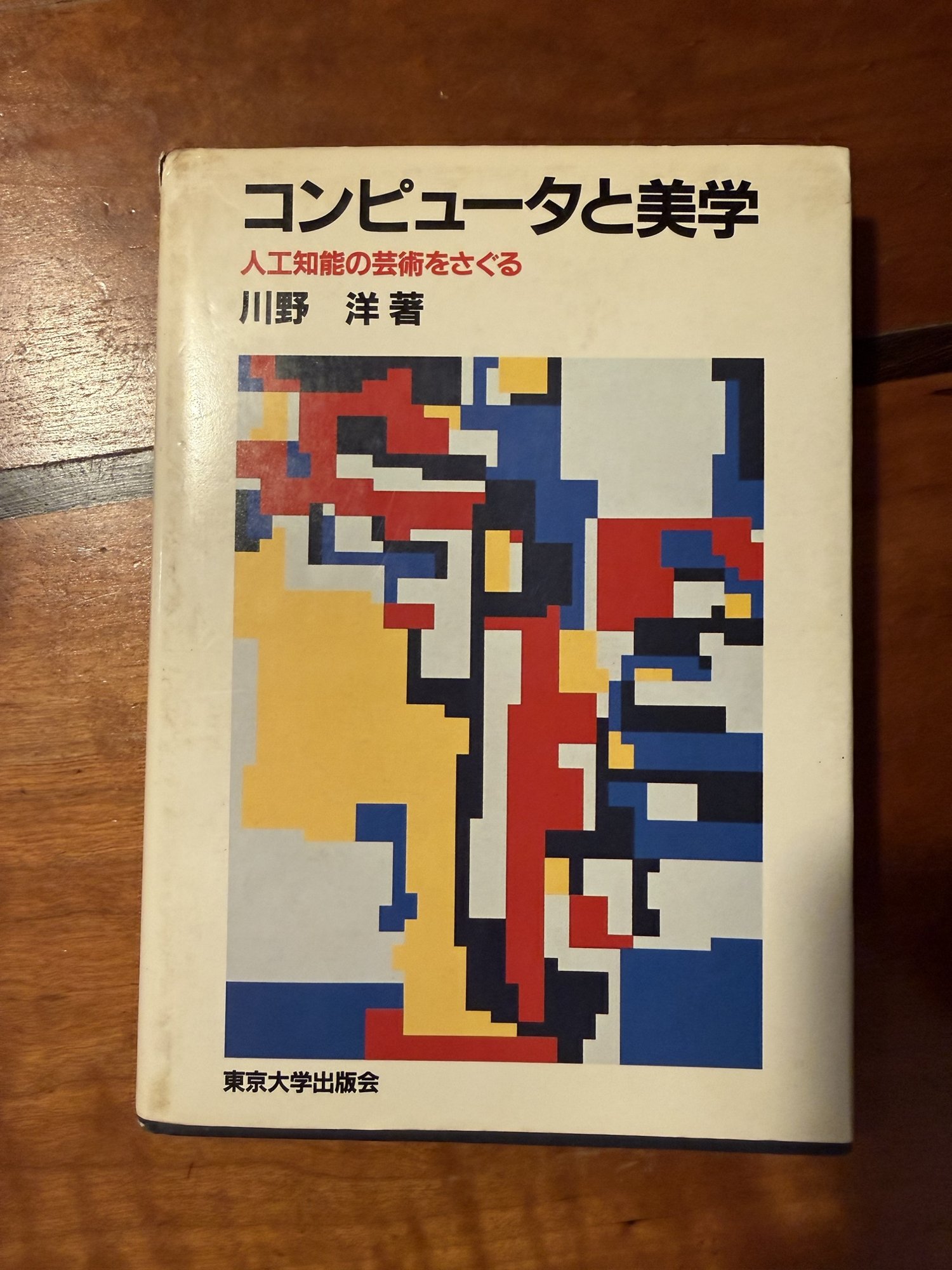
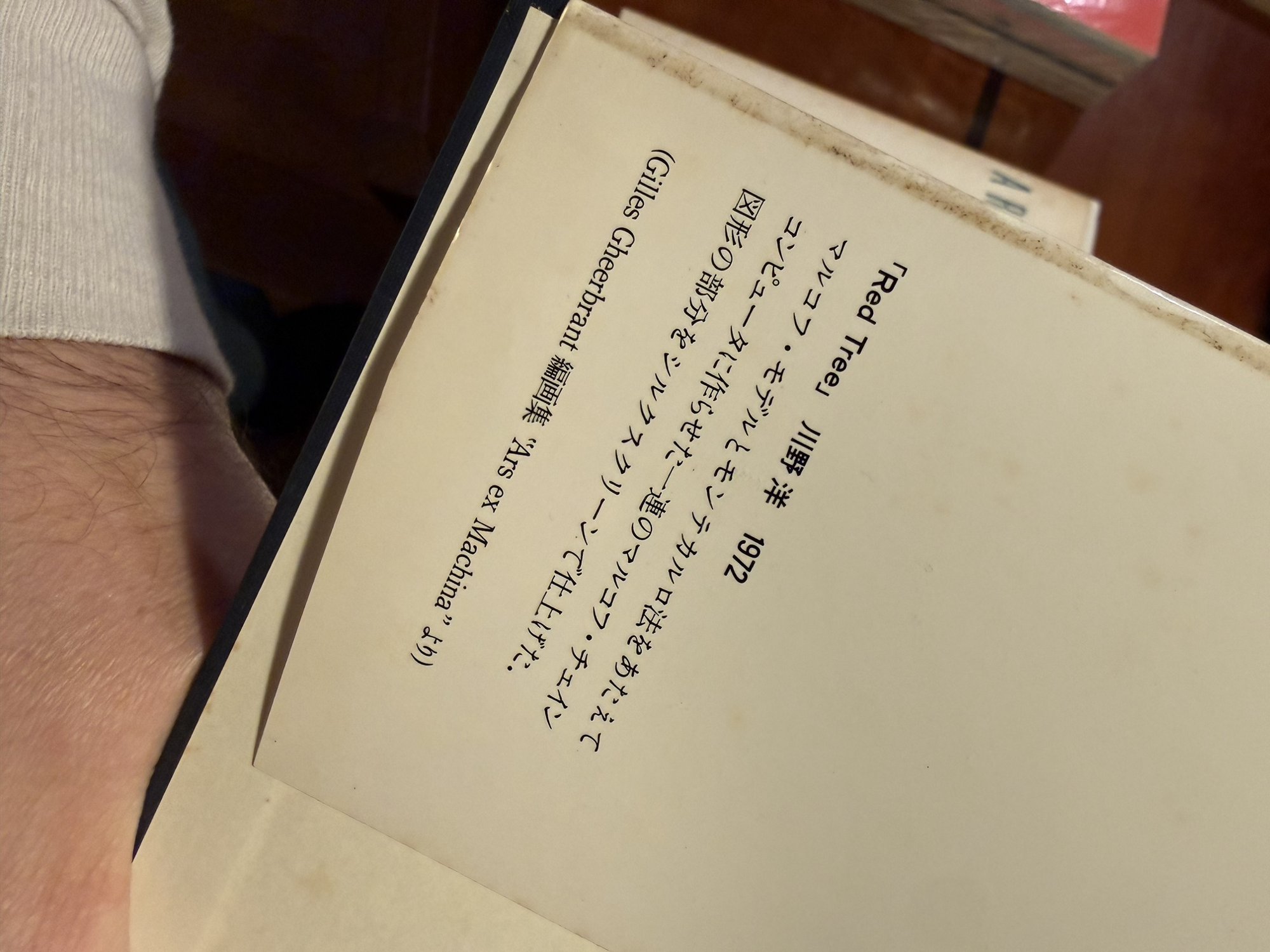
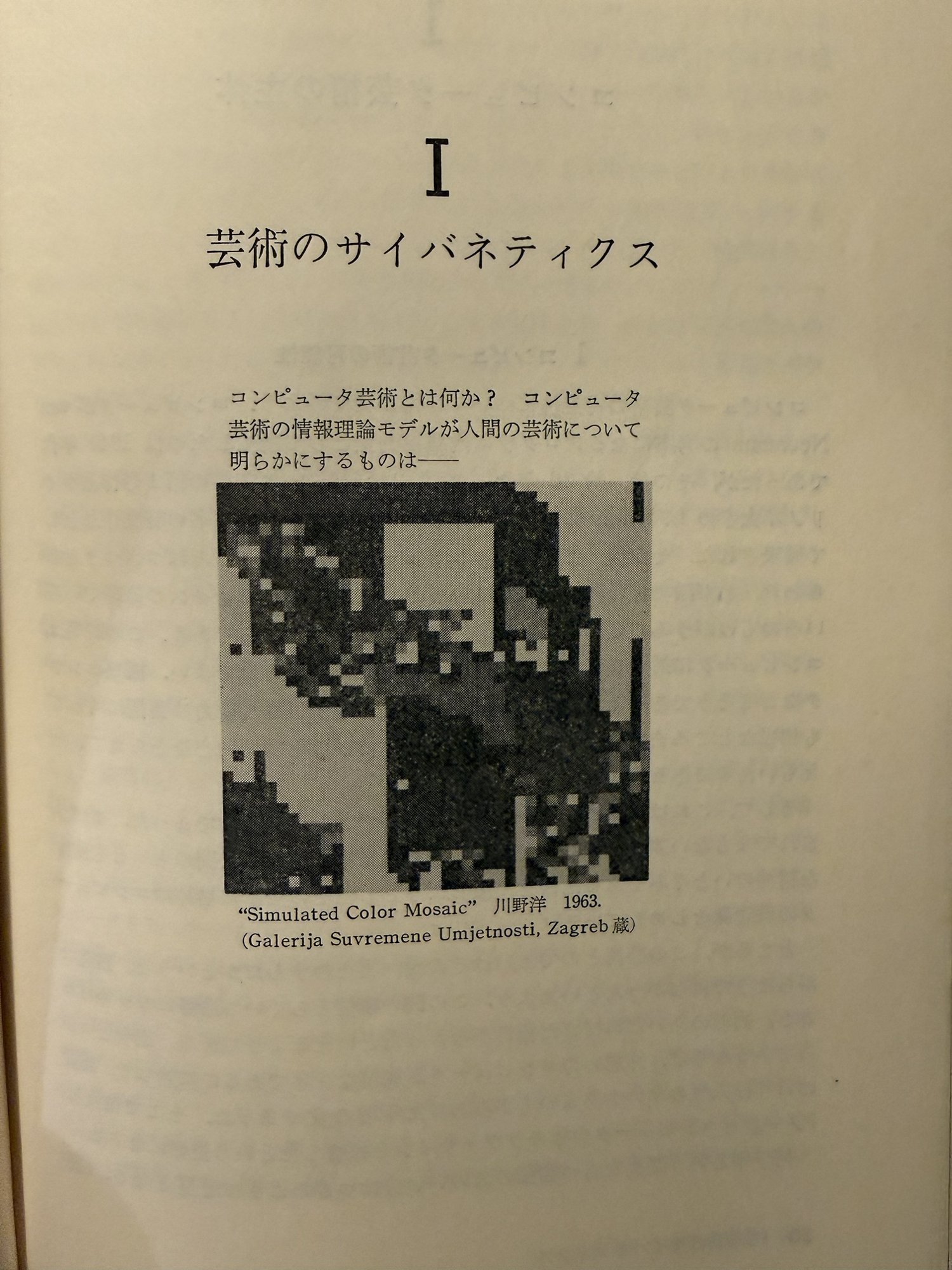
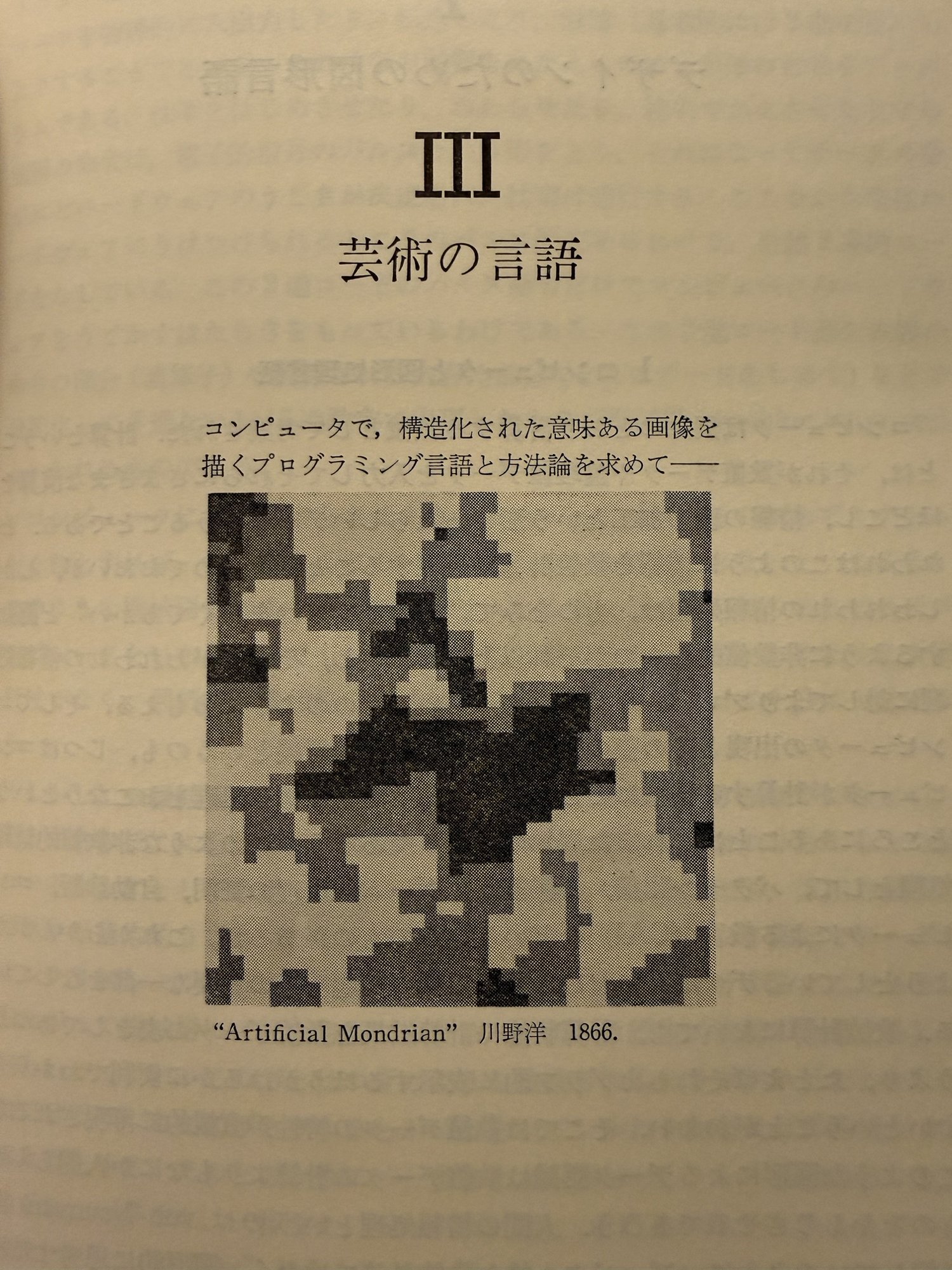
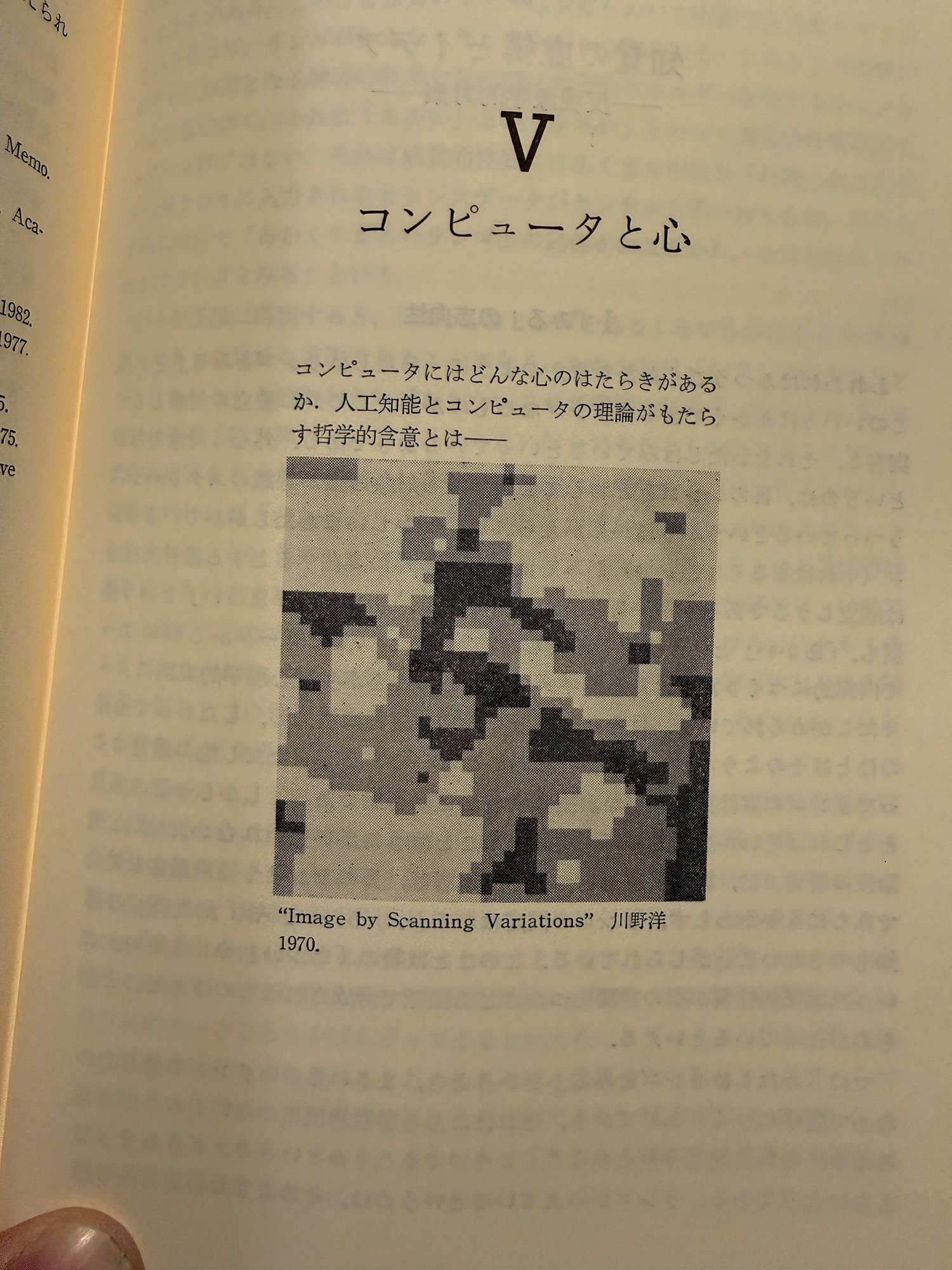
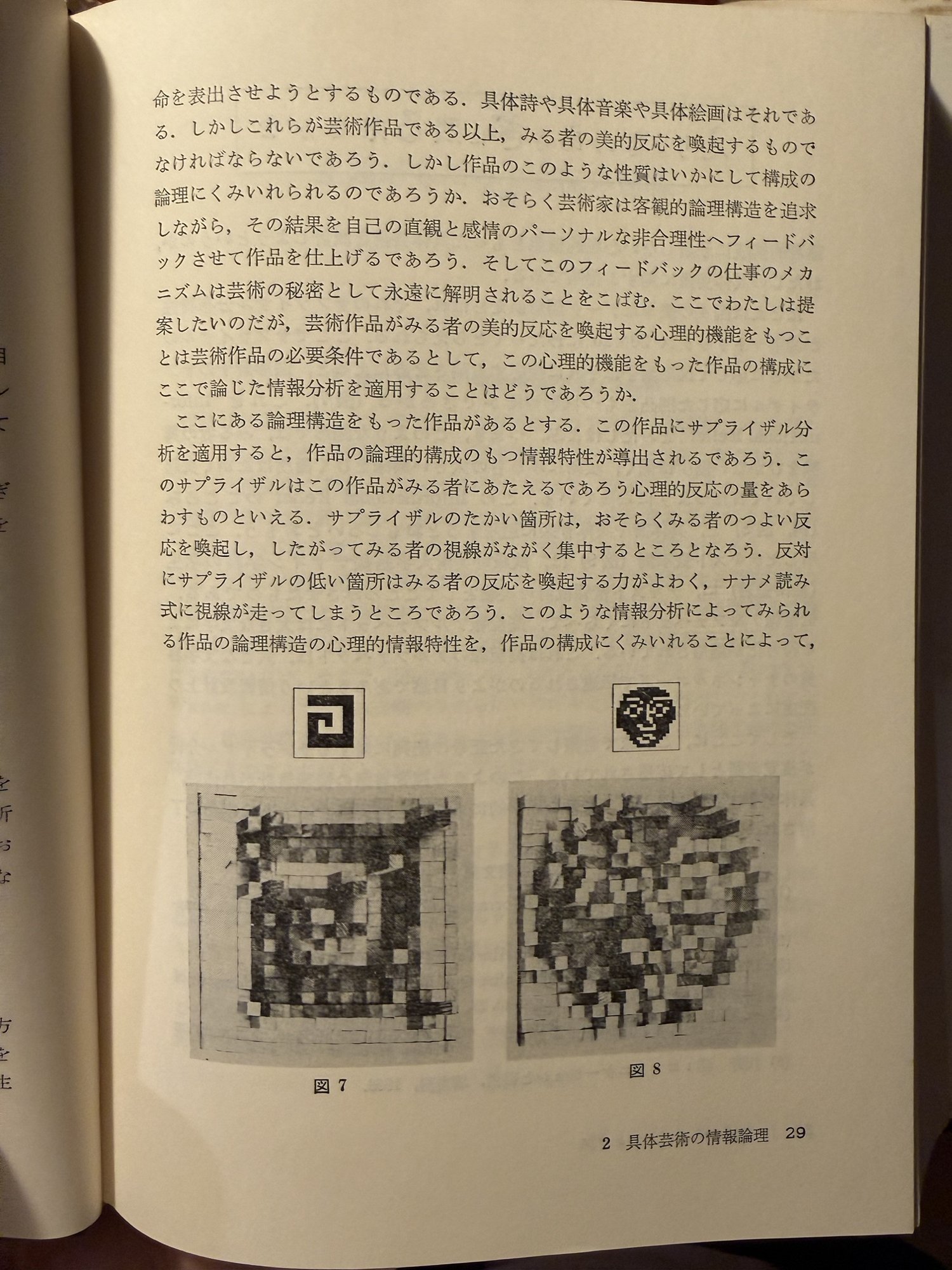
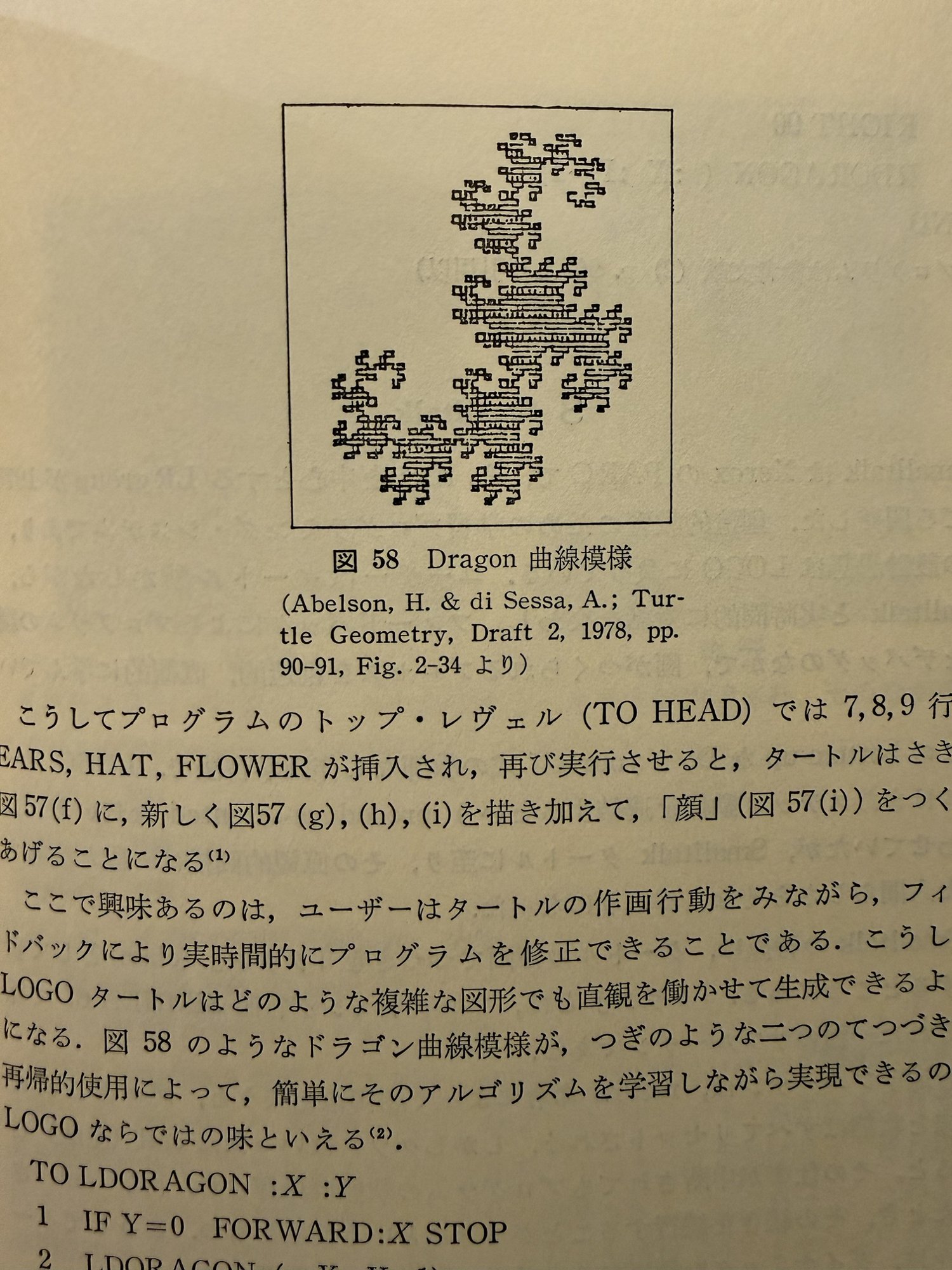
Wishlist — held by the Spalter Digital collection, absent from our library. Kawano — the first philosopher-practitioner of computer art in Japan. Publisher: Tokyo. Bought 11 October 2026 through ZenMarket (womh33) from Mercari Shops: used copy, University of Tokyo Press, ISBN 413080085X, item ¥30,274 + ¥800 commission. In transit from Japan. Received 3 November 2026 and photographed: jacket, front flap, the openers of Parts I, III and V, and two inside pages. University of Tokyo Press (東京大学出版会), December 1984, 341 pp., 22 cm, ISBN 4-13-080085-X. Kawano's major statement of his aesthetics, written after twenty years of making computer art; he submitted it to Osaka University as his doctoral thesis and took the degree in 1986. The parts seen: I 芸術のサイバネティクス (The Cybernetics of Art) asks what computer art is and what an information-theoretic model of it reveals about human art; its section 2, 具体芸術の情報論理, applies surprisal analysis in the manner of Bense and Moles to concrete art, arguing that the high-surprisal passages of a work are where the viewer's eye will rest. III 芸術の言語 (The Language of Art) looks for a programming language and method for structured, meaningful images, and works through LOGO turtle geometry with Abelson and diSessa's dragon curve. V コンピュータと心 (Computers and Mind) takes up the philosophical implications of artificial intelligence. Each part opens with one of Kawano's own works: Simulated Color Mosaic (captioned 1963; the Zagreb gallery's copy), Artificial Mondrian (1966, a Markov-chain composition; the caption misprints the year as 1866) and Image by Scanning Variations (1970). The front flap reproduces Red Tree (1972), the silkscreen from Gheerbrant's Art Ex Machina portfolio; the collection holds that print (PION.2016.009-6). The jacket carries a Kawano mosaic in Mondrian colours.