Hiroshi Kawano
1925–2012
Hiroshi Kawano (1925–2012) was a Japanese philosopher of aesthetics and one of the world's earliest computer-art pioneers, publishing computer-generated images as early as 1964 — works such as Design 3-1 produced on an OKITAC 5090A computer using Markov-chain processes and then hand-colored. Trained in neo-Kantian philosophy, semiotics, and information theory, he taught aesthetics in Tokyo and approached the computer as a tool for investigating the logic of artistic creation across images, poetry, and music. His complete estate — roughly eighty artworks plus programs, writings, and correspondence — is held by ZKM | Center for Art and Media Karlsruhe.
Works in the collection
No published works yet.
In the library

社会メディアとしてのコンピュータアートの系譜―CACとポストCACを中心に― (A Genealogy of Computer Art as Social Media: Centring on CAC and Post-CAC)
Michihiro Maekawa · 2025
lgorithms don’t seem across Europe and was a member of a sense of order, then introducing
· 2022
Monitor ISH (2007), IX/2, 47–59 1.02 Pregledni znanstveni članek
· 2019
Magyar m‹vészek és a számítógép || Hungarian Artists and the Computer
Böröcz András · 2018
Review of "Thinking Machines: Art and Design in the Computer Age, 1959-1989”
Kendra Chilson Máté Szabó · 2017
Review of "Thinking Machines: Art and Design in the Computer Age, 1959-1989”
Kendra Chilson Máté Szabó · 2017
Computer graphics- Computer art Editorial by Professor Kunii Editorial by Professor Franke It has been the goal o f the Vi- The tools and methods of com-
· 2016
Document generated on 11/25/2021 3:28 a.m.
ETC MEDIA · 2015
Thomas Dreher History of Computer Art
· 2015
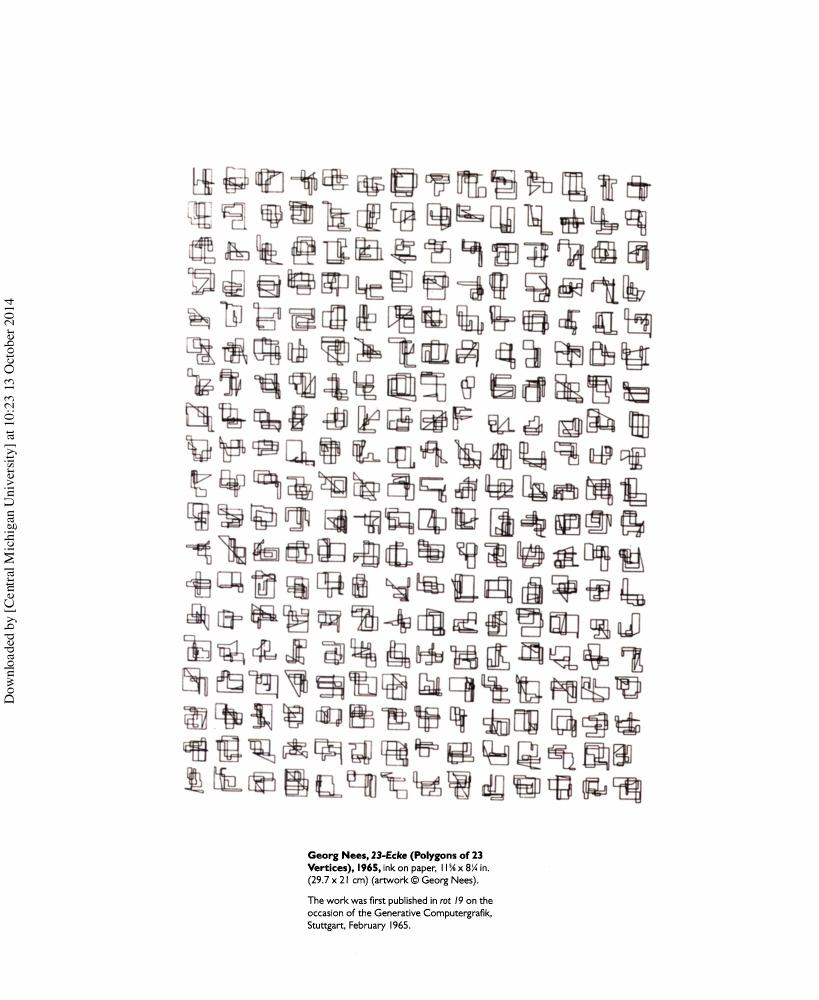
The Semiotic Engine: Notes on the History of Algorithmic Images in Europe
Frieder Nake · 2009

20th Century Computer Art: Beginnings and Developments
Hiroshi Kawano, Koji Kusabuka, Akihiro Kubota · 2006
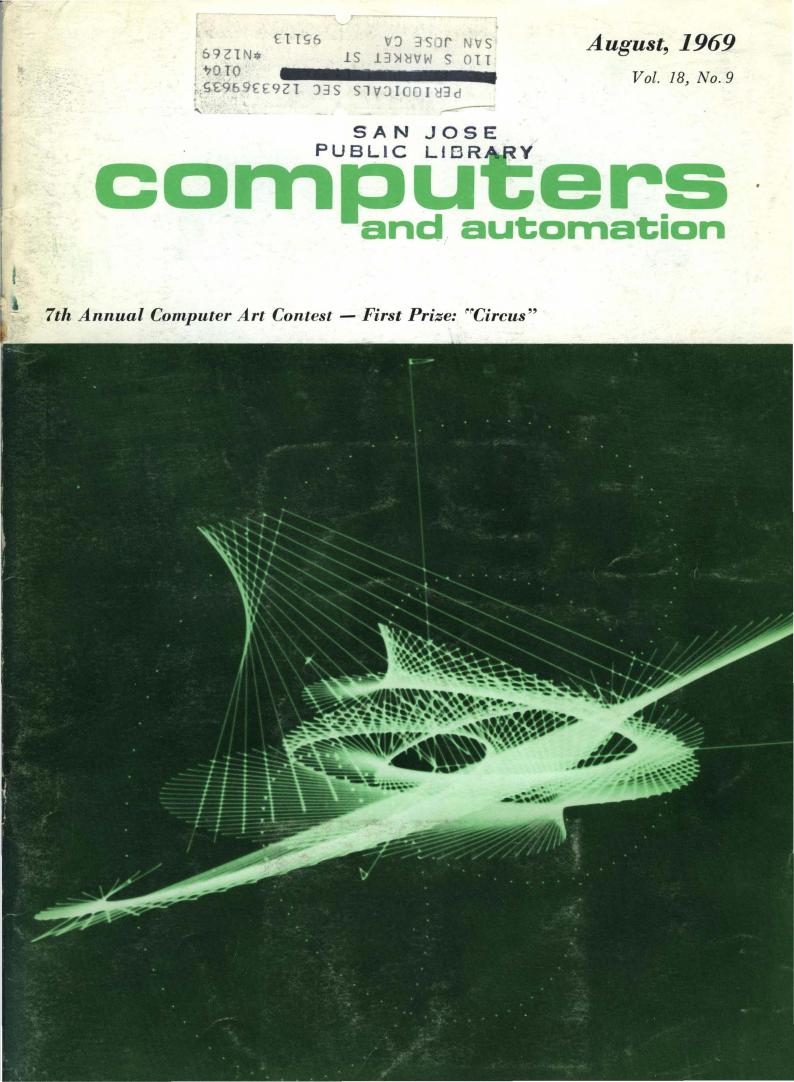
Computers and Automation, Vol. 18 No. 9 (August 1969) — Seventh Annual Computer Art Contest
Edmund C. Berkeley (ed.) · 1969
No cover
LOGO入門 (電子計算機のプログラミング 10) — An Introduction to LOGO
Hiroshi Kawano
No cover
ネットワーク美学の誕生 — 「下からの綜合」の世界に向けて (The Birth of Network Aesthetics)
Hiroshi Kawano